
| Definition | Enlarged veins within the scrotum, usually around the testicle. |
|---|---|
| Severity | Most varicoceles are not dangerous, but some may affect testicular function, fertility or testosterone production. |
| Symptoms | Many men have no symptoms. Others may experience scrotal heaviness, aching, swelling or a noticeable change in the testicle. |
| Effect on fertility | A clinically significant varicocele may impair sperm production and semen quality in some men. |
| Diagnosis | Usually through a medical review and physical examination, with ultrasound used when appropriate. |
| Treatment | Observation may be appropriate when a varicocele is not causing significant symptoms or reproductive problems. In selected cases, treatment may include varicocelectomy. |
For men in Singapore who are concerned about fertility, a varicocele can raise questions about sperm count, testosterone and whether surgery is necessary. Not every varicocele requires treatment and its significance depends on the individual.
What Is Varicocele?
A varicocele occurs when the veins within the scrotum become enlarged due to abnormal blood flow or pooling of blood. It most commonly develops on the left side, although it can occur on the right or affect both sides.
The veins surrounding the testicle contain valves that help direct blood away from the testicle. When these valves do not work effectively, blood can flow backwards and accumulate within the veins, causing them to become enlarged.
How serious is a varicocele?
For most men, a varicocele is not an emergency and is not life-threatening. Many cause no symptoms and do not require treatment.
However, a clinically significant varicocele can sometimes affect sperm production, testicular growth or function. Some studies have also found an association between varicocele and reduced testosterone production in selected men, although this is not present in every patient.
How Does Varicocele Affect Fertility?
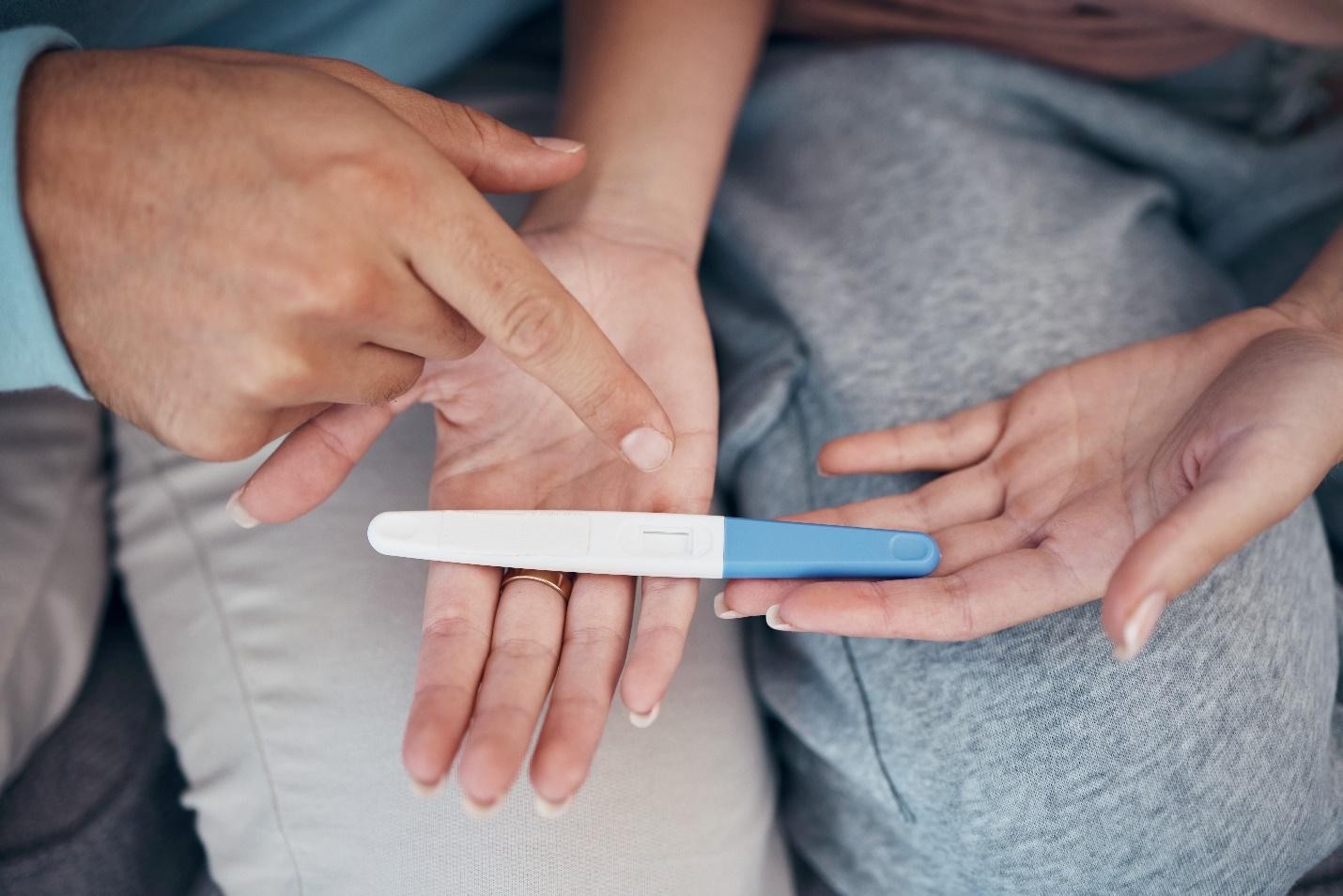
A varicocele is one of the recognised conditions associated with male infertility. However, having enlarged scrotal veins does not automatically mean that a man will have difficulty conceiving.
The exact mechanisms are not completely understood, but may include:
Increased testicular temperature
Enlarged veins may interfere with the temperature regulation needed for normal sperm production
Oxidative stress
Changes in the local testicular environment may increase oxidative stress, which can affect sperm cells
Abnormal blood flow
Altered venous drainage may affect the environment in which sperm are produced
Changes in testicular function
Over time, a significant varicocele may affect the cells responsible for sperm production
These effects can contribute to abnormalities in sperm concentration, movement or morphology.
Importantly, not every man with a varicocele has abnormal sperm. Fertility assessment should therefore consider the semen analysis and the overall reproductive health of both partners rather than relying on the presence or size of the varicocele alone.
What Are the Causes of Varicocele?
A varicocele develops when blood does not drain efficiently through the veins surrounding the testicle, causing them to enlarge.
They occur more commonly on the left because the left testicular vein follows a different drainage pathway from the right. Differences in venous anatomy, valve function and pressure within these veins may contribute to blood pooling and enlargement.
What Are the Symptoms of Varicocele?

Many men with a varicocele have no symptoms at all. But when symptoms do occur, they may include:
- Aching or discomfort – a dull, dragging sensation may become more noticeable after prolonged standing or physical activity
- Scrotal heaviness – the affected side may feel heavier, particularly towards the end of the day
- Enlarged or prominent veins – the veins may be visible or feel like a soft, twisted collection beneath the skin
- Testicular size difference – affected testicles may sometimes be smaller, particularly when a varicocele develops during adolescence
- Fertility difficulties – some men only discover they have a varicocele when investigations are performed because they are having difficulty conceiving
What Are the Complications Associated With Varicocele?
Most varicoceles do not cause serious complications. However, a significant or longstanding varicocele may be associated with:
- Male infertility – changes in the testicular environment may impair sperm production and contribute to abnormal semen parameters
- Impaired sperm production – in some men with significant testicular dysfunction, semen abnormalities can be substantial
- Changes in testosterone production – some men with clinically significant varicocele may have impaired Leydig-cell function and lower testosterone levels, although varicocele does not necessarily cause testosterone deficiency
- Testicular growth or volume changes – a significant varicocele during adolescence may affect the development or size of the affected testicle
How Is Varicocele Diagnosed in Singapore?
A clinical varicocele is primarily diagnosed through physical examination. Ultrasound may be used when the examination is uncertain or when additional anatomical or blood-flow information is required.
The diagnostic measures are simple and commonly entail:
- Medical review – our urologist will ask about symptoms such as scrotal discomfort or swelling, when you first noticed the change, previous testicular problems and any fertility concerns.
- Physical examination – the testicles and surrounding veins are examined, usually while standing and lying down. Our doctor may also ask you to perform a manoeuvre that temporarily increases abdominal pressure, making enlarged veins easier to detect.
- Scrotal ultrasound – ultrasound may be recommended when the examination is uncertain, when the testicles need further assessment or when another cause of scrotal swelling needs to be excluded. Doppler ultrasound can also assess blood flow within the veins.
- Semen analysis – men with fertility concerns may undergo semen analysis to assess sperm concentration, and morphology. Advanced tests for sperm DNA fragmentation and oxidative stress are used in selected cases.
- Hormonal testing – testosterone and other reproductive hormones may be assessed when there are concerns about testicular function, sperm production or symptoms of hormonal deficiency.
What Are the Grades of a Varicocele?
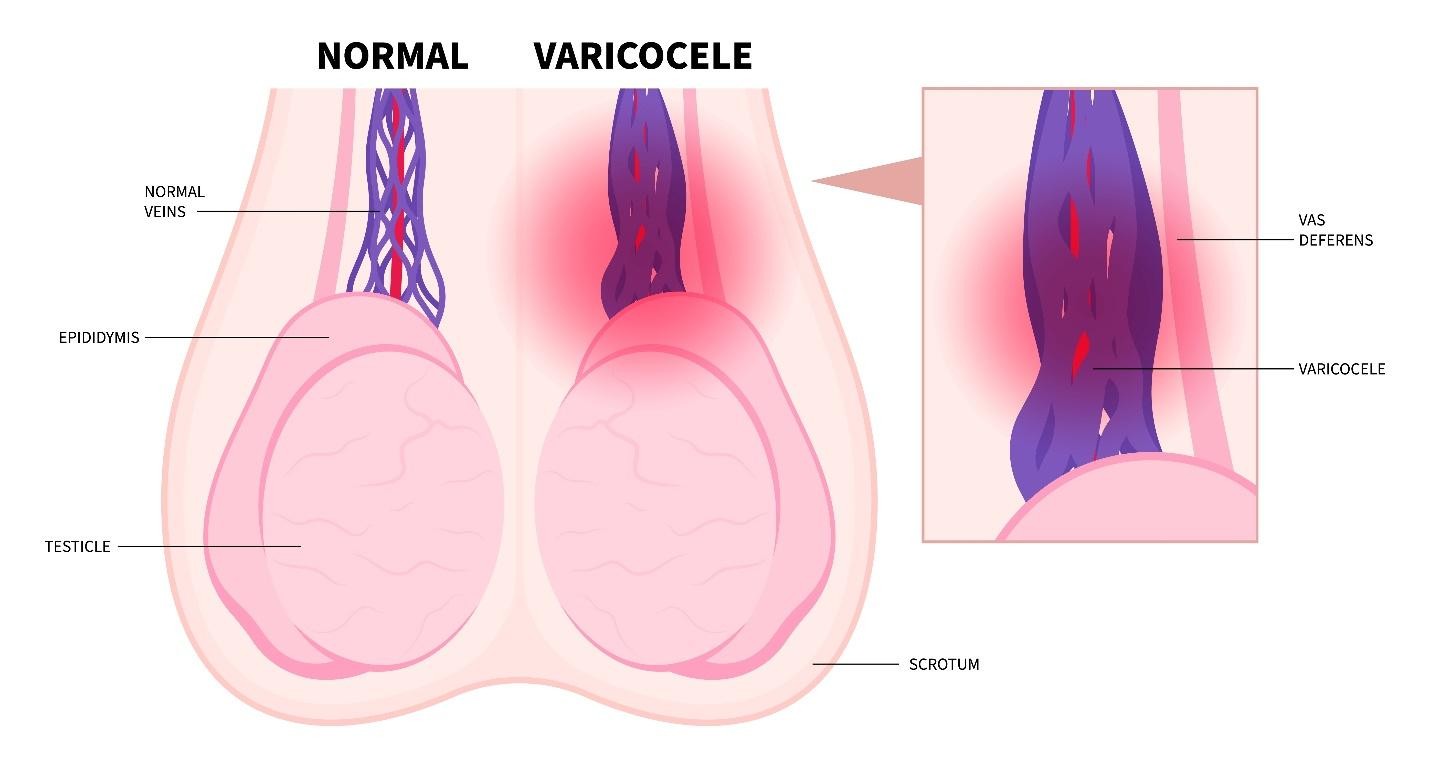
Varicoceles can be graded according to their clinical findings. This involves:
- Grade 0 (subclinical) – the varicocele cannot be felt during examination and is only detected through imaging such as ultrasound
- Grade 1 – the enlarged veins are usually not visible or palpable at rest but can be felt when abdominal pressure is increased
- Grade 2 – the varicocele can be felt during a physical examination while standing, without needing to increase abdominal pressure
- Grade 3 – the enlarged veins are large enough to be visible through the scrotal skin
However, a higher grade does not automatically mean that surgery is required. The grade is only one part of the assessment; symptoms, semen quality, testicular function and fertility goals also matter.
How Is Varicocele Treated in Singapore?
Treatment is not necessary for every varicocele. The appropriate approach depends on whether the varicocele is causing symptoms, affecting sperm quality or testicular function, and the man’s fertility goals.
Observation and conservative management
Men with a varicocele that is not causing significant symptoms or affecting fertility may be managed without immediate intervention.
- Observation – regular follow-up may be appropriate when there are no significant symptoms, abnormal semen parameters or evidence of impaired testicular function.
- Symptom management – mild discomfort may be managed with measures such as activity modification and appropriate pain relief where necessary.
- Fertility monitoring – men who are concerned about fertility may undergo semen analysis and, where appropriate, hormonal assessment to monitor reproductive function over time.
Conservative management does not remove the varicocele. Instead, it allows the condition and its potential effects to be monitored while avoiding unnecessary treatment.
Varicocelectomy
Varicocelectomy is a surgical procedure that treats a varicocele by identifying and closing the enlarged veins responsible for abnormal blood flow. Blood can then be redirected through healthier veins while preserving the testicle's normal arterial blood supply.
Varicocelectomy may be considered when a clinically significant varicocele is associated with infertility and abnormal semen parameters, particularly when the couple is trying to conceive. It may also be considered in selected men with persistent varicocele-related pain or evidence of impaired testicular function.
The goal of surgery is to address the underlying abnormal venous drainage rather than simply remove the visible veins.
When is treatment considered?
A varicocele is generally treated only when there is a clinical reason to intervene, such as infertility with abnormal semen parameters, persistent pain or evidence of impaired testicular function.
This may include:
- Infertility with abnormal semen parameters – particularly when a clinically palpable varicocele is present and the couple is trying to conceive
- Testicular growth or function concerns – particularly in younger men where the affected testicle shows evidence of impaired development
- Persistent varicocele-related pain – when discomfort continues despite appropriate conservative management
- Evidence of impaired reproductive function – such as clinically relevant changes in sperm production or testicular function
A higher varicocele grade alone does not necessarily mean that treatment is required. The decision should take into account symptoms, semen quality, testicular function, fertility goals and the overall clinical picture.
When Should I See an Andrologist for Varicocele?
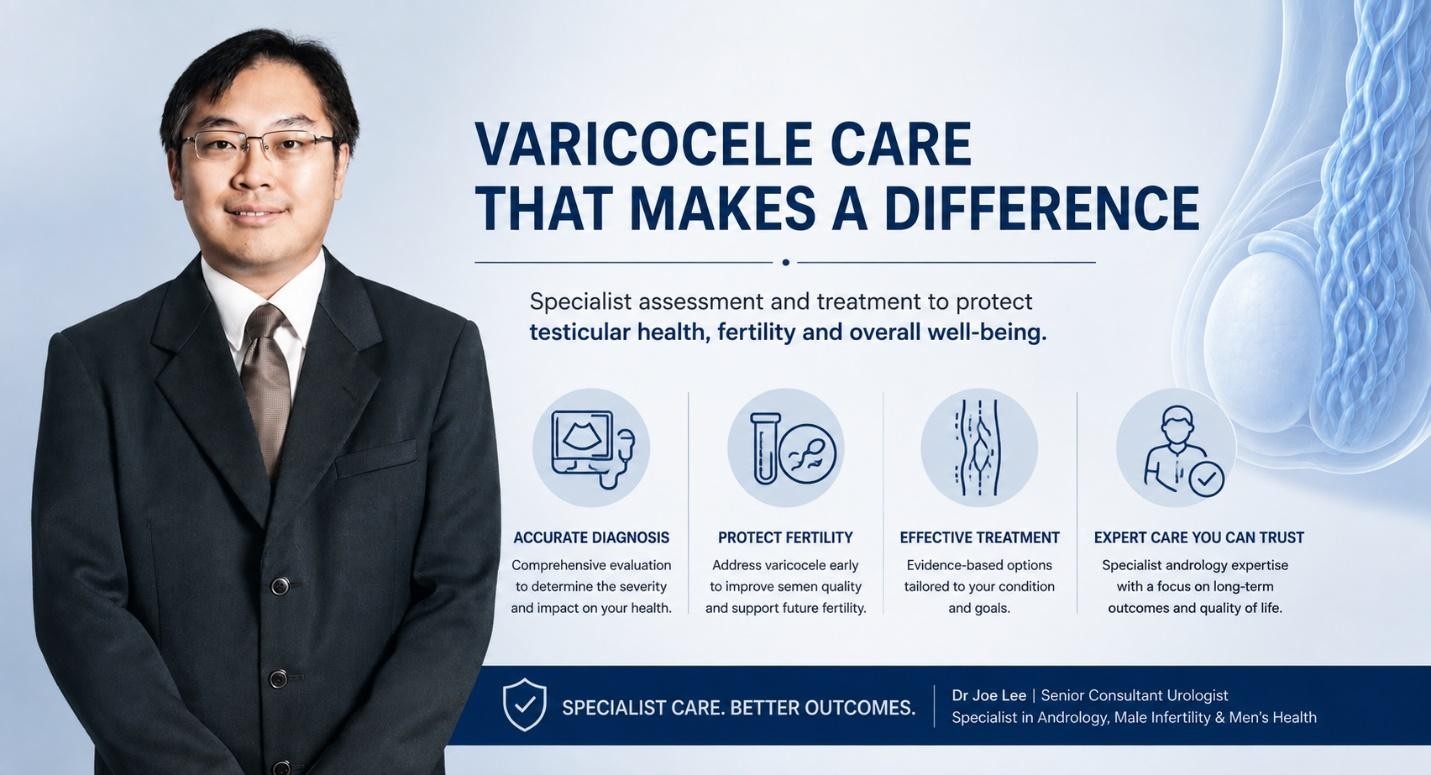
A varicocele may appear to be a straightforward problem involving enlarged scrotal veins, but its significance can extend to sperm production, testosterone, testicular function and fertility.
This is where an andrology-focused assessment can be particularly valuable.
Dr Joe Lee is a Senior Consultant Urologist with a subspecialty focus in andrology, male infertility and men's health. He previously served as Senior Consultant and Director of Andrology & Male Reproductive Medicine at NUH and completed an Andrology Fellowship at St Joseph Hospital, University of Western Ontario, where his training included microsurgery and sperm retrieval.
This background is relevant for men whose varicocele is associated with abnormal semen results, fertility difficulties, testicular changes or other male reproductive concerns. An andrology assessment can help determine whether the varicocele is clinically significant and whether treatment is likely to be appropriate.
Book an Appointment
Finding out that you have a varicocele does not automatically mean that you need surgery. Equally, persistent scrotal symptoms or fertility difficulties should not simply be dismissed.
Whether you have noticed swelling, been diagnosed with a varicocele during an examination, or are concerned about its effect on your fertility, a specialist assessment can give you a clearer understanding of what it means for you.
Book an appointment with Dr Joe Lee to have your varicocele assessed and understand the next steps for your reproductive and overall men's health.
Frequently Asked Questions
It is also important to distinguish physical recovery from fertility recovery. If varicocele surgery is performed to improve sperm production, changes in semen parameters generally take longer because new sperm require time to develop.
No, both can cause swelling in the scrotum, but they involve different structures.
| VARICOCELE | HYDROCELE |
| Enlarged veins around the testicle | Collection of fluid around the testicle |
| Often feels soft or like enlarged veins | Usually feels like a smooth, fluid-filled swelling |
| May be associated with impaired sperm production | Usually does not directly affect sperm production |
| Treatment is only required in selected cases | Treatment depends on the size, symptoms and underlying cause |
A varicocele is primarily associated with testicular function and fertility, rather than being a direct cause of erectile dysfunction. Some men with varicoceles may also have hormonal abnormalities, but erectile difficulties should be assessed separately because erectile dysfunction has many possible causes.