


| Treatment | Testosterone Replacement Therapy (TRT) |
|---|---|
| Also known as | Testosterone therapy, testosterone replacement; may be administered through testosterone injections, topical gels or other testosterone preparations depending on individual suitability |
| Used for | Treating testosterone deficiency (male hypogonadism) in men with compatible symptoms and consistently low testosterone levels |
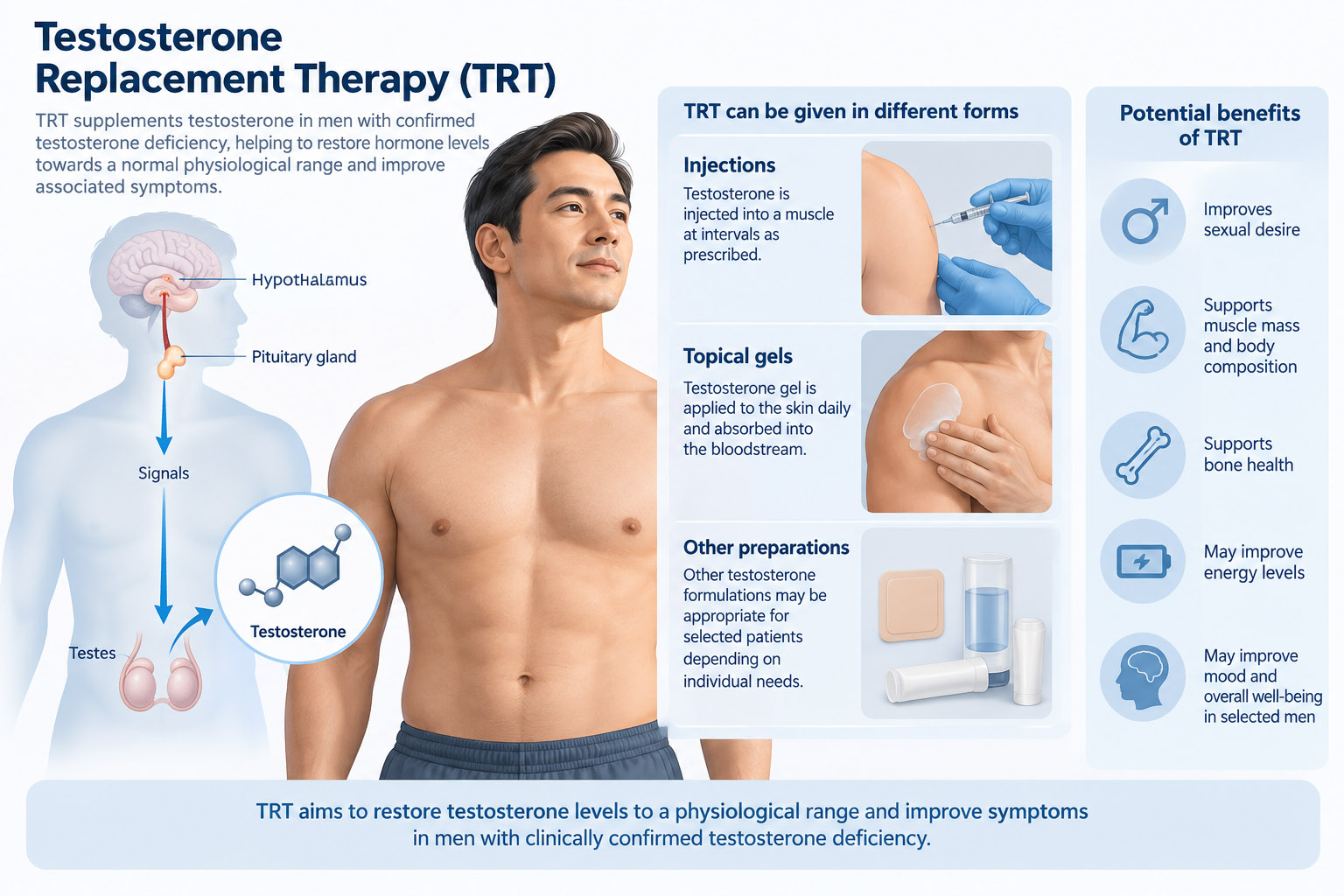
| How it works | TRT supplements testosterone to restore hormone levels towards the normal physiological range and improve symptoms associated with testosterone deficiency |
| Treatment setting | Usually outpatient treatment with regular clinical and blood-test monitoring |
| Treatment duration | Varies according to the underlying cause, response to treatment and individual circumstances |
| Suitable for | Men with symptoms or signs of testosterone deficiency and low testosterone confirmed through appropriate assessment and blood tests |
What is Testosterone Deficiency?
Testosterone is the principal male sex hormone and plays an important role in sexual function, sperm production, muscle and bone health, and body composition. Testosterone deficiency, also known as male hypogonadism, occurs when the body does not produce sufficient testosterone and may cause symptoms such as reduced sexual desire, erectile difficulties, low energy, loss of muscle mass, mood changes and reduced bone density.
Because these symptoms can also result from other medical or lifestyle factors, testosterone deficiency should be confirmed through clinical assessment and appropriately timed blood tests rather than symptoms or a single low testosterone result alone. In men with confirmed testosterone deficiency, testosterone replacement therapy (TRT) may be considered to restore testosterone towards a physiological range and improve associated symptoms.
Watch Dr Joe Lee explain the relationship between testosterone and erectile dysfunction and how testosterone levels may affect sexual function.
@drjollyurology Feeling off? Low libido? Your testosterone levels might be the missing piece of the puzzle! 🧩 urology testosterone lowlibido menshealthawareness doctorsoftiktok fyp EDawareness
♬ original sound - Dr Joe Lee | Urology - Dr Joe Lee | Urology
When is Testosterone Replacement Therapy Recommended?
Testosterone replacement therapy is generally considered when a man has symptoms or signs consistent with testosterone deficiency and blood tests confirm consistently low testosterone levels. The underlying cause should also be investigated before treatment is started.
TRT may be recommended if you have:
- Confirmed low testosterone levels — Testosterone remains consistently low on appropriately performed blood tests.
- Symptoms of testosterone deficiency — Reduced libido, sexual symptoms or other recognised features of hypogonadism are affecting your health or quality of life.
- Primary hypogonadism — Conditions affecting the testes may reduce their ability to produce adequate testosterone.
- Secondary hypogonadism — Disorders affecting the pituitary gland or hypothalamus may interfere with the hormonal signals responsible for testosterone production.
- Persistent symptoms after potentially reversible factors have been assessed — Obesity, certain medications, other medical conditions and lifestyle factors can contribute to low testosterone and may require management as part of treatment.
- A clinical need for testosterone replacement — Following assessment, your doctor determines that the potential benefits of replacing testosterone are appropriate in relation to your individual health profile and treatment goals.
TRT is not intended simply to increase testosterone in men with normal hormone levels or as a general treatment for ageing, tiredness or reduced physical performance. Current guidance recommends testosterone therapy for appropriately diagnosed hypogonadism rather than treating symptoms or laboratory values in isolation.
Testosterone plays a key role in sperm development and male fertility. However, TRT can suppress sperm production and is generally unsuitable for men currently trying to conceive. Fertility plans should therefore be discussed before alternative treatment begins.
Types of Testosterone Replacement Therapy
Testosterone can be administered in different forms. The most appropriate option depends on your testosterone levels, symptoms, medical history, lifestyle, treatment preference and response to therapy.
- Testosterone injections — Testosterone is administered by injection at intervals determined by the specific preparation used. Depending on the formulation, injections may be given at shorter or longer intervals to maintain appropriate testosterone levels.
- Testosterone gels — Testosterone-containing gel is applied to the skin, allowing testosterone to be absorbed into the bloodstream. Application is generally required daily, and precautions are needed to prevent transfer of the medication to another person through skin contact.
- Other testosterone preparations — Other formulations may be available or appropriate for selected patients. Your doctor can discuss their dosing requirements, advantages, limitations and potential side effects.
The choice of treatment is individualised. Factors such as convenience, testosterone concentrations, treatment response, potential adverse effects and personal preference may be considered when selecting a formulation. Current European guidance recommends that patients are informed about the benefits and potential adverse effects of the available preparations before treatment is selected.
What to Expect During Testosterone Replacement Therapy
TRT requires appropriate assessment before treatment and regular monitoring after therapy begins. The aim is to restore testosterone to an appropriate physiological range while improving clinically relevant symptoms and monitoring for potential treatment-related effects.
Before Treatment
- Consultation — Your symptoms, medical history, sexual health, treatment goals and concerns are discussed in detail.
- Assessment of symptoms — Symptoms potentially associated with testosterone deficiency are reviewed to determine whether hormonal investigation is appropriate.
- Testosterone blood tests — Testosterone is generally measured in the morning, and a low result should be confirmed with repeat testing before treatment is started.
- Additional hormone tests — Tests such as luteinising hormone (LH) and follicle-stimulating hormone (FSH) may be performed to help distinguish between testicular and pituitary or hypothalamic causes of testosterone deficiency.
- General health assessment — Existing medical conditions, current medications and factors that may contribute to low testosterone or affect treatment suitability are reviewed.
- Fertility discussion — Current or future fertility plans should be discussed because external testosterone can suppress sperm production.
- Prostate assessment where appropriate — Depending on your age, medical history and individual risk factors, prostate assessment and prostate-specific antigen (PSA) testing may be considered before treatment.
- Baseline blood tests — Haemoglobin and haematocrit may be assessed because testosterone can increase red blood cell production.
- Discussion of treatment options — The available formulations, expected benefits, limitations, potential risks and monitoring requirements are discussed before treatment begins.
During Treatment
TRT is administered according to the formulation selected and your individual treatment plan. During treatment, your doctor will:
- Administer or prescribe testosterone — Treatment may involve testosterone injections, topical gel or another appropriate preparation.
- Monitor testosterone levels — Follow-up blood tests are used to assess whether testosterone concentrations are within the intended treatment range.
- Assess symptom improvement — Changes in sexual symptoms and other relevant manifestations of testosterone deficiency are reviewed.
- Adjust treatment when necessary — The dose, frequency or formulation may be modified according to testosterone levels, symptom response and side effects.
- Monitor treatment safety — Blood count and other appropriate investigations are performed at intervals based on your treatment and clinical circumstances.
Follow-Up and Ongoing Monitoring
TRT requires continued follow-up rather than a single course of treatment. During follow-up, you can generally expect:
- Repeat testosterone testing — Testosterone levels are monitored after treatment begins and periodically thereafter.
- Haematocrit monitoring — Testosterone can increase red blood cell production, making regular haematocrit monitoring important during treatment. The EAU recommends monitoring testosterone and haematocrit at three, six and 12 months after initiation and annually thereafter, with closer monitoring where clinically indicated.
- Assessment of symptoms — Your doctor will determine whether treatment is producing meaningful improvement in the symptoms for which TRT was started.
- Monitoring for side effects — Potential treatment-related effects are assessed during follow-up.
- Prostate monitoring where indicated — PSA or other prostate assessment may be performed according to your age, individual risk factors and clinical circumstances.
- Treatment adjustment — The dose, frequency or formulation may be changed if testosterone levels are outside the intended range or adverse effects occur.
- Regular clinical reviews — Continued assessment allows the benefits and potential risks of treatment to be reviewed over time.
Benefits of Testosterone Replacement Therapy
For men with clinically confirmed testosterone deficiency, TRT may improve symptoms and physiological effects associated with inadequate testosterone. The degree of benefit varies between individuals and depends partly on which symptoms are attributable to testosterone deficiency.
Potential benefits include:
- Improves sexual desire — Testosterone therapy can improve reduced libido in men with hypogonadism.
- May improve sexual function in selected patients — Some men with sexual symptoms related to testosterone deficiency experience improvement, although erectile dysfunction can have several causes and may require additional treatment.
- Supports muscle mass and body composition — Restoring testosterone can contribute to improvements in lean body mass and body composition.
- Supports bone health — Testosterone contributes to bone maintenance, and treatment can improve bone mineral density in men with testosterone deficiency.
- May improve other symptoms associated with low testosterone — Some appropriately selected men experience improvement in symptoms related to hypogonadism, although response varies between individuals.
- Restores testosterone towards a physiological range — Treatment is intended to correct testosterone deficiency rather than produce testosterone concentrations above the normal range.
Evidence is strongest for improvements in certain sexual symptoms and body composition, while the effects on some other symptoms are less consistent. TRT should therefore be prescribed according to the individual diagnosis and treatment goals rather than with the expectation that every symptom will improve.
Risks and Limitations of Testosterone Replacement Therapy
TRT can be effective for appropriately selected men, but it requires medical supervision because testosterone affects several systems in the body. Potential benefits, risks and alternatives should be discussed before treatment begins.
Potential risks and limitations include:
- Increased haematocrit — Testosterone can increase red blood cell production. An excessive rise in haematocrit may require adjustment or temporary interruption of treatment.
- Acne or oily skin — Increased skin oil production and acne may occur during treatment.
- Breast symptoms — Some men may develop breast tenderness or enlargement.
- Fluid retention — Testosterone can cause fluid retention in some patients and requires particular consideration in men with certain underlying medical conditions.
- Reduced sperm production — External testosterone suppresses hormonal signals involved in sperm production and can significantly impair fertility during treatment.
- Testicular changes — Suppression of the body’s natural testosterone production may result in reduced testicular volume in some men.
- Prostate monitoring may be required — Prostate health should be considered before and during TRT according to individual age, risk factors and clinical circumstances.
- Formulation-specific side effects — Injections can cause injection-site discomfort, while gels may irritate the skin and can be transferred to others through direct skin contact if appropriate precautions are not followed.
- Symptoms may not improve — Fatigue, reduced libido, erectile difficulties and mood changes can have causes unrelated to testosterone deficiency. TRT may therefore provide limited benefit when low testosterone is not responsible for the symptoms.
- Long-term treatment may be required — Depending on the underlying cause of testosterone deficiency, ongoing treatment and regular medical monitoring may be necessary.
- Treatment is not suitable for everyone — Certain medical conditions and fertility plans may make TRT inappropriate or require further assessment before treatment is considered. Alternative treatment options can be considered.
Your doctor will assess your individual health profile and discuss whether the potential benefits of TRT outweigh the potential risks before recommending treatment.
What Results Can Patients Expect from Testosterone Replacement Therapy?
Testosterone replacement therapy aims to restore testosterone towards an appropriate physiological range and improve symptoms attributable to testosterone deficiency. Response depends on the underlying cause, severity of deficiency, treatment formulation and individual health factors.
Following TRT, patients can generally expect:
- Gradual improvement rather than immediate results — Different symptoms may respond at different rates, and treatment response is assessed over time.
- Potential improvement in sexual symptoms — Reduced sexual desire and some other sexual symptoms associated with testosterone deficiency may improve following treatment.
- Changes in body composition over time — Improvements in lean body mass and other physical effects generally develop progressively.
- Ongoing blood-test monitoring — Testosterone concentrations and relevant safety parameters need to be assessed periodically throughout treatment.
- Possible adjustment of treatment — Dosage, treatment intervals or the testosterone formulation may need to be modified according to hormone levels, response and side effects.
- Individual variation in symptom response — Not every symptom will necessarily improve, particularly when other medical, psychological or lifestyle factors are involved.
- Continued clinical review — Long-term follow-up allows your doctor to determine whether TRT continues to provide meaningful benefit and remains appropriate.
For men with confirmed hypogonadism, TRT can correct testosterone deficiency and improve associated symptoms, but treatment requires an individualised approach and continued medical monitoring.
Summary
Testosterone replacement therapy is used to treat men with clinically confirmed testosterone deficiency when consistently low testosterone is accompanied by compatible symptoms or signs. Depending on individual suitability, testosterone may be administered through injections, topical gels or other preparations.
Before TRT is started, appropriate blood testing and clinical assessment are required to confirm testosterone deficiency and investigate its possible cause. Fertility plans, general health, blood count and prostate health may also need to be considered.
Regular monitoring remains an important part of treatment. Testosterone levels, symptom response and potential adverse effects are reviewed over time so that treatment can be adjusted when necessary.
If you are experiencing symptoms that may be associated with low testosterone, schedule a consultation with Dr Joe Lee for an assessment and to determine whether testosterone replacement therapy may be appropriate for you.