


| Treatment | Circumcision for Young Children |
|---|---|
| Also known as | Paediatric circumcision, childhood circumcision |
| Used for | Pathological phimosis, recurrent foreskin inflammation or infection, selected urinary concerns or cultural and religious reasons |
| How it works | The foreskin covering the head of the penis is surgically removed, leaving the glans exposed |
| Anaesthesia | Usually general anaesthesia in young children, with local anaesthetic pain relief where appropriate |
| Treatment setting | Usually performed as day surgery, methods include: laser, shangring, stapler and conventional. |
| Recovery | Initial soreness and swelling generally improve gradually, while complete healing may take several weeks |
| Suitable for | Children with an appropriate medical indication or whose parents choose circumcision for cultural or religious reasons following consultation |
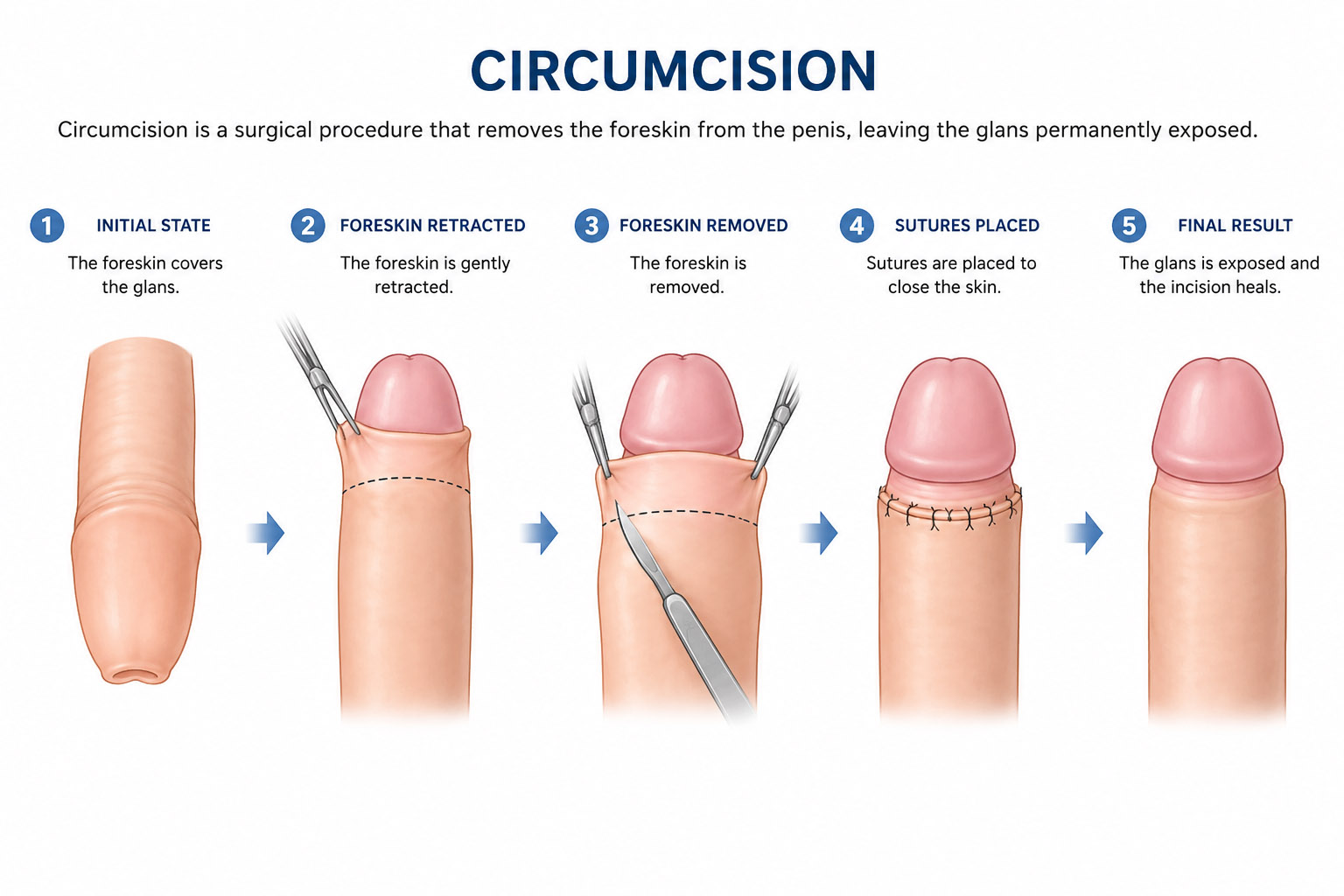
What is Circumcision for Young Children?
Circumcision for young children is a surgical procedure that permanently removes the foreskin covering the head (glans) of the penis. It may be performed to treat a medical condition affecting the foreskin or chosen by parents for cultural or religious reasons. In young children, the procedure is commonly carried out under general anaesthesia so that the child remains still and comfortable throughout surgery.
After the foreskin is removed, the skin edges are usually closed with absorbable stitches, which dissolve as the wound heals. Circumcision permanently changes the appearance of the penis by leaving the glans exposed. Before proceeding, parents should understand why the procedure is being considered, whether non-surgical alternatives are appropriate, what recovery involves and the possible surgical and anaesthetic risks.
Is a Non-Retractable Foreskin Normal in Young Children?
In many babies and young children, the foreskin cannot yet be pulled back because it remains naturally attached to the glans. This is known as physiological non-retractability and usually forms part of normal development rather than indicating a medical problem.
- Normal foreskin development — The foreskin commonly remains attached to the glans or cannot be fully retracted during early childhood.
- Gradual separation — As the child grows, the natural attachments generally separate and the foreskin becomes increasingly mobile and retractable at its own pace.
- No forced retraction — The foreskin should not be forcibly pulled back, as doing so can cause pain, bleeding, tearing and scarring that may contribute to pathological phimosis.
- When assessment is needed — Medical review is advisable if the child develops persistent pain, visible scarring, recurrent inflammation, repeated urinary infections or difficulty passing urine.
Normal non-retractability does not usually require circumcision. A doctor should first distinguish physiological development from pathological phimosis, in which scarring causes abnormal narrowing of the foreskin.
When May Circumcision Be Recommended for a Child?
Circumcision is not required for every tight or non-retractable foreskin. Observation, appropriate hygiene guidance or prescribed topical steroid treatment may be considered first when suitable. Surgery is more likely to be recommended when symptoms are persistent or recurrent, or when the foreskin has become scarred.
- Pathological phimosis — Scarring forms a tight ring at the foreskin opening, preventing normal retraction and potentially causing pain, inflammation or difficulty passing urine.
- Recurrent balanitis or balanoposthitis — Repeated inflammation affecting the glans, foreskin or both may lead to consideration of circumcision when symptoms continue despite appropriate treatment.
- Balanitis xerotica obliterans — Also known as penile lichen sclerosus, this condition causes progressive inflammation and scarring that can narrow the foreskin and may require surgical treatment.
- Recurrent urinary tract infections — Circumcision may be considered in selected children with repeated infections, particularly when other urinary factors increase their risk.
- Paraphimosis — A foreskin that has been retracted and becomes trapped behind the glans requires prompt medical treatment. Circumcision may subsequently be considered to reduce the risk of recurrence.
- Cultural or religious reasons — Parents may choose circumcision according to family, cultural or religious practices after discussing the procedure, anaesthesia, recovery and risks with the surgeon.
Whether circumcision is appropriate depends on the child’s symptoms, examination findings, medical history and response to previous treatment.
Watch Dr Joe Lee explain an aspect of foreskin health that may help parents better understand the assessment of foreskin-related concerns.
@drjollyurology Does it serve a purpose? Do we even need it? 🤔 urology urologist andrology andrologist doctor doctorsoftiktok menshealth menhealthtips fyp foryou
♬ original sound - Dr Joe Lee | Urology - Dr Joe Lee | Urology
When Might Circumcision Be Delayed or Unsuitable?
Circumcision may be unnecessary, postponed or unsuitable when the foreskin reflects normal development, when another treatment should be tried first or when the child has an anatomical condition requiring specialist planning.
- Normal physiological non-retractability — A foreskin that has not yet become retractable may simply reflect the child’s developmental stage and usually does not require surgery.
- Symptoms suitable for conservative treatment — Some cases of symptomatic phimosis may initially be treated with a prescribed topical corticosteroid and careful retraction guidance rather than immediate circumcision.
- Congenital penile differences — Circumcision is generally avoided in children with conditions such as hypospadias or buried penis because the foreskin may be needed for later reconstructive surgery.
- Active infection or illness — Surgery may be postponed until an active local infection, fever or other health concern has been assessed and treated.
A specialist examination is therefore important before childhood circumcision, particularly when the penis appears anatomically different or the diagnosis is uncertain.
What to Expect During Circumcision for Young Children?
Circumcision in young children is usually planned as a day procedure. Before surgery, the urologist assesses the child carefully, explains why circumcision is being considered and discusses the procedure, possible alternatives, recovery and potential risks with the parents.
Before Surgery
- Consultation — The urologist discusses the child’s symptoms, medical history and the medical, cultural or religious reason for considering circumcision.
- Physical examination — The foreskin and penis are examined to confirm the diagnosis and identify anatomical differences that may affect whether or how surgery is performed.
- Discussion of alternatives — When appropriate, options such as observation or prescribed topical corticosteroid treatment may be considered before surgery, particularly for foreskin narrowing without significant scarring.
- Anaesthesia assessment — The child’s general health is reviewed so that anaesthesia and postoperative pain relief can be planned safely.
- Consent and preparation — Parents receive information about the procedure, its permanent nature, possible complications, fasting requirements, medications and arrival instructions.
During Surgery
- Administration of anaesthesia — Young children are commonly placed under sedation or general anesthesia so they remain still and comfortable throughout the procedure.
- Preparation of the surgical area — The skin is cleaned, and the foreskin and surrounding structures are assessed before removal.
- Removal of the foreskin — The appropriate amount of foreskin is surgically removed while protecting the glans and surrounding tissues. The methods for circumcision include: laser circumcision, shangring circumcision, stapler circumcision and conventional circumcision.
- Control of bleeding — Small blood vessels are carefully sealed to minimise bleeding.
- Closure of the wound — The skin edges are usually closed with absorbable sutures that dissolve during healing and generally do not need to be removed.
- Application of a dressing — A protective dressing may be placed over the surgical area, depending on the technique and the surgeon’s preference.
After Surgery
- Recovery monitoring — The child is observed while waking from anaesthesia, and the surgical team monitors comfort, the wound and the ability to pass urine.
- Same-day discharge — Most children can return home once they are awake, comfortable, able to drink and pass urine appropriately.
- Pain relief — Parents receive instructions on administering the recommended pain medication during the early recovery period.
- Wound care — Guidance is provided on dressings, bathing, nappy changes or clothing and keeping the area clean.
- Activity restrictions — Rough play, cycling, swimming and activities that place pressure on the surgical area may need to be avoided temporarily.
- Follow-up — The surgeon reviews wound healing and addresses any concerns that arise during recovery.
Benefits of Circumcision for Young Children
The possible benefits of childhood circumcision depend on why the procedure is performed. Circumcision is not necessary for every non-retractable foreskin, and the expected benefits should be considered alongside available alternatives and the permanent nature of surgery.
- Treatment of pathological phimosis — Removing a scarred foreskin provides a definitive treatment for persistent pathological narrowing that causes symptoms or does not respond to appropriate conservative management.
- Reduced recurrence of foreskin inflammation — Circumcision may reduce repeated episodes of balanitis or balanoposthitis in children with recurrent inflammation and urinary tract infections.
- Relief of foreskin-related symptoms — Pain, scarring or urinary difficulties caused by diseased foreskin tissue may improve after treatment.
- Easier hygiene — Removing the foreskin may make cleaning the glans more straightforward as the child grows.
- Permanent treatment — Conditions arising directly from the removed foreskin, such as pathological foreskin narrowing, cannot recur in the same form after complete healing.
- Usually performed as day surgery — Most children can return home on the day of surgery after recovering adequately from anaesthesia.
Risks and Limitations of Circumcision for Young Children
Circumcision is generally performed safely in an appropriate clinical setting, but it remains a surgical procedure with potential complications. Parents should understand the medical and non-medical considerations, available alternatives and the fact that the foreskin cannot be restored after removal.
- Pain or discomfort — Tenderness is expected during early recovery and is usually managed with appropriate pain relief.
- Swelling or bruising — Temporary redness, swelling and bruising around the surgical area are common and usually settle gradually.
- Bleeding — Minor bleeding may occur, while heavier or persistent bleeding requires medical assessment.
- Infection — A wound infection can develop and may require medical treatment, although this is uncommon.
- Delayed wound healing — The wound may occasionally take longer than expected to heal or the skin edges may separate.
- Temporary sensitivity or irritation — The exposed glans may initially feel sensitive or become irritated by nappies or clothing.
- Scarring or cosmetic variation — The final scar and appearance vary according to the child’s anatomy, surgical technique and healing.
- Rare injury to surrounding structures — Damage to the glans, urethra or other nearby tissues is rare but recognised as a possible surgical complication.
- Risks associated with anaesthesia — General anaesthesia carries its own potential side effects and complications, which are discussed during the preoperative assessment.
- Permanent removal of the foreskin — Circumcision is irreversible and permanently changes the appearance of the penis.
Recovery After Circumcision in Young Children
Recovery differs between children according to their age, the surgical technique and individual healing. Some redness, swelling, bruising and tenderness are expected initially and should gradually improve rather than disappear immediately.
Parents should follow the surgeon’s specific postoperative instructions, as these take priority over general guidance.
- Initial swelling and tenderness — The penis may appear red, bruised or swollen during the early healing period.
- Pain relief — Recommended medication should be given according to the prescribed dose and schedule to keep the child comfortable.
- Dressing and wound care — The dressing should be managed as instructed, and the area should be kept clean without rubbing or scrubbing.
- Nappy changes — For children wearing nappies, frequent changes help keep the area clean. A protective ointment may sometimes be recommended to prevent the wound from sticking to the nappy.
- Loose clothing — Older children may be more comfortable wearing loose-fitting underwear and clothing that does not rub against the wound.
- Bathing — Parents should follow the surgeon’s instructions on when bathing may resume and avoid soaking the wound until advised.
- Temporary activity restrictions — Cycling, swimming, vigorous exercise, rough play and activities that place pressure on the area should be avoided until healing is sufficient.
- Absorbable stitches — These usually dissolve naturally and do not normally require removal.
- Staplers and shangrings - These usually dislodge naturally and do not require removal.
- Signs requiring medical review — Parents should seek medical advice for persistent or heavy bleeding, increasing redness or swelling, fever, discharge, worsening pain, difficulty passing urine or concerns that the wound is not healing properly.
- Follow-up with the surgeon — Review allows the surgeon to assess healing and address any postoperative concerns.
What Results Can Parents Expect After Childhood Circumcision?
Childhood circumcision permanently removes the foreskin. The expected outcome depends on why surgery was performed, the child’s anatomy and how the wound heals.
- Permanent removal of the foreskin — The glans remains exposed after the wound has healed.
- Resolution of foreskin narrowing — Pathological phimosis is treated because the scarred or narrowed foreskin has been removed.
- Reduced recurrence of foreskin-related inflammation — Repeated inflammation affecting the removed foreskin may become less likely when surgery was performed for this reason.
- Gradual healing — Redness, swelling, bruising and tenderness settle progressively over time and the final appearance should not be judged during the early recovery period.
- Individual cosmetic appearance — The eventual appearance varies according to anatomy, surgical technique, scar formation and healing.
- Follow-up remains important — Postoperative review helps confirm that healing is progressing appropriately and allows complications to be identified early.
Summary
Circumcision for young children permanently removes the foreskin covering the glans and may be performed to treat conditions such as pathological phimosis or recurrent foreskin inflammation. Parents may also choose the procedure for cultural or religious reasons after discussing the surgery, anaesthesia, recovery, alternatives and possible risks with the urologist.
A non-retractable foreskin is often a normal part of early childhood development and does not automatically require surgery. Specialist assessment helps distinguish normal physiological non-retractability from scarring or another medical problem and determines whether observation, conservative treatment or circumcision is the most appropriate approach.
If your child is experiencing foreskin-related symptoms or you are considering circumcision, schedule a consultation with Dr Joe Lee to discuss whether the procedure is appropriate for your child.