


| Treatment | ED Shockwave Therapy (Li-ESWT). |
|---|---|
| Also known as | Low-Intensity Extracorporeal Shockwave Therapy (Li-ESWT). |
| Used for | Selected men with erectile dysfunction, particularly when reduced penile blood flow is involved and when there are painful penile plaques. |
| How it works | Delivers low-intensity acoustic waves to penile tissue to stimulate biological processes associated with vascular function and tissue repair. |
| Downtime | Minimal; most patients can resume normal daily activities afterwards. |
| Treatment course | Usually performed over multiple sessions, depending on the treatment plan. |
| Suitable for | Selected men with vasculogenic erectile dysfunction after medical assessment. |
Erectile dysfunction (ED) is a common condition in which a man is unable to achieve or maintain an erection firm enough for satisfactory sexual activity. Although it becomes more common with age, ED is not an inevitable part of ageing and can affect men of all ages. It may result from reduced blood flow to the penis, nerve damage, hormonal imbalances, certain medications, psychological factors or a combination of these.
For many men, oral medications such as phosphodiesterase type 5 (PDE5) inhibitors can improve erectile function. However, some men experience only a partial response, find that the medication becomes less effective over time or are unable to take it because of certain medical conditions or side effects. In these situations, alternative treatment options may be considered.
Low-intensity extracorporeal shockwave therapy (Li-ESWT), also known as ED shockwave therapy, is a non-invasive treatment that has been investigated for selected men with erectile dysfunction, particularly when reduced penile blood flow is the underlying cause. As ED can arise from several different conditions, identifying the cause of the problem is an important first step in determining whether Li-ESWT is likely to be an appropriate treatment.
How Does Li-ESWT Work?
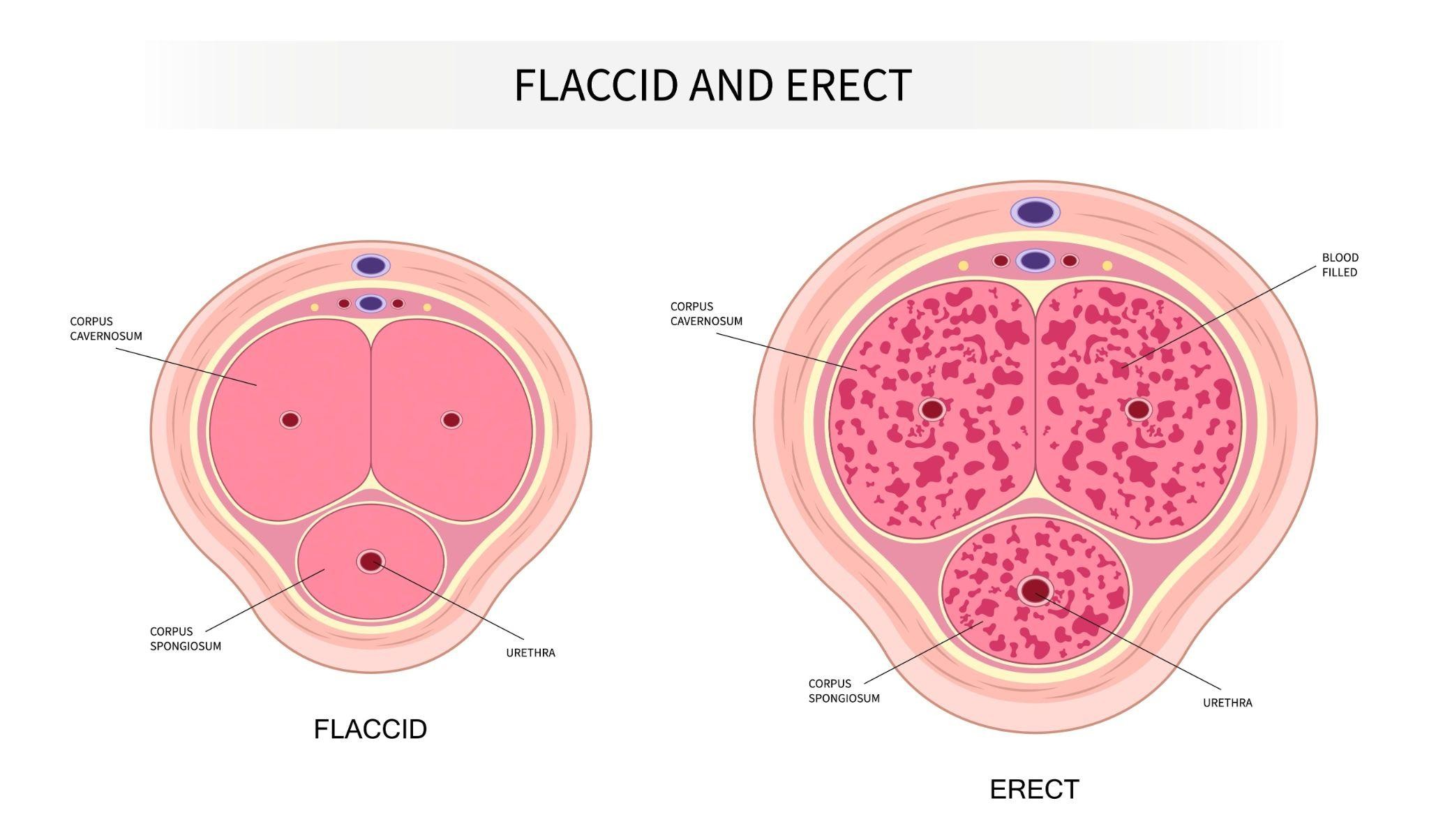
An erection depends on a healthy blood supply to the penis. When a man becomes sexually aroused, blood flows into the erectile tissue, allowing the penis to become firm and maintain an erection. In some men, this process is affected by reduced blood flow, a condition known as vasculogenic erectile dysfunction, making it difficult to achieve or sustain an erection. It is also used to treat painful penile plaques caused by Peyronie’s disease.
Li-ESWT is designed to target these vascular changes by delivering low-intensity acoustic waves to penile tissue. While research is ongoing, the treatment is thought to stimulate biological responses that support blood vessel health and tissue repair. Any improvement typically develops gradually over time rather than immediately.
- Normal erectile function — During sexual stimulation, blood vessels in the penis relax and widen, allowing blood to flow into the erectile tissue. As the tissue fills with blood, the penis becomes firm enough to achieve and maintain an erection.
- Reduced penile blood flow — Conditions such as diabetes, high blood pressure, high cholesterol and cardiovascular disease can damage or narrow blood vessels, reducing blood flow to the penis. This is known as vasculogenic erectile dysfunction, one of the most common causes of ED.
- Delivery of acoustic waves — Li-ESWT uses a handheld device to deliver controlled low-intensity acoustic waves to targeted areas of penile tissue. The treatment is performed externally without surgery, injections or implanted devices.
- Stimulation of tissue repair — The acoustic waves are believed to stimulate biological processes associated with blood vessel function and tissue repair. They may also promote the release of growth factors that support vascular health and improve the blood supply to penile tissue.
- Gradual improvement in erectile function — Unlike oral ED medication, which works shortly after it is taken, Li-ESWT is intended to encourage gradual biological changes within the treated tissue. As these changes take time to develop, any improvement in erectile function typically occurs over the weeks or months following treatment rather than immediately after a session.
Watch Dr Joe Lee explain how ED shockwave therapy works, who it may be suitable for, and what patients can expect from treatment.
@drjollyurology Looking for a long-term solution to ED? Sending shock waves in the news! ⚡ LISWT can be a suitable treatment option. Learn more. urology LISWT menshealthawareness doctorsoftiktok fyp EDawareness
♬ original sound - Dr Joe Lee | Urology - Dr Joe Lee | Urology
Who May Benefit from ED Shockwave Therapy?
ED shockwave therapy is not suitable for every man with erectile dysfunction. It is generally considered for selected patients after a comprehensive assessment to determine the underlying cause of their symptoms and whether Li-ESWT is an appropriate treatment option.
You may be a suitable candidate if you have:
- Mild to moderate vasculogenic erectile dysfunction — ED primarily caused by reduced blood flow to the penis rather than nerve damage or hormonal disorders.
- Cardiovascular risk factors affecting blood flow — Conditions such as diabetes, high blood pressure, high cholesterol or early cardiovascular disease that contribute to impaired penile circulation.
- An incomplete response to oral ED medication — Men who achieve limited improvement with PDE5 inhibitors, such as sildenafil or tadalafil, may benefit from Li-ESWT as part of their treatment plan.
- A preference for a non-invasive treatment — Men looking for a treatment option that does not involve surgery, injections or implanted devices.
Ultimately, treatment suitability can only be determined after a thorough consultation and assessment with your urologist.
What to Expect During ED Shockwave Therapy?
ED shockwave therapy is performed as an outpatient procedure and does not require surgery or hospital admission. Most treatment sessions are completed within a short period, allowing patients to return to their usual activities afterwards.
Before treatment
- Comprehensive assessment — Your urologist will review your medical history, symptoms and any previous treatments to identify the underlying cause of your erectile dysfunction.
- Diagnosis and treatment planning — If Li-ESWT is appropriate, your diagnosis will be confirmed and an individualised treatment plan will be discussed.
- Discussion of expectations — Your urologist will explain the expected benefits, limitations and treatment timeline so you have realistic expectations before starting therapy.
During treatment
- Comfortable positioning — You will lie comfortably while the treatment areas are prepared.
- Application of ultrasound gel — A gel is applied to help transmit the acoustic waves effectively.
- Delivery of acoustic waves — A handheld device delivers low-intensity acoustic waves to specific areas of the penis according to the treatment protocol.
- No incisions or injections — The procedure is performed externally without surgery, needles or implanted devices.
After treatment
- Return to normal activities — Most patients can resume their usual daily activities immediately after each session.
- Follow-up appointments — Your progress will be monitored during follow-up visits to assess your response to treatment and determine whether further management is required.
Benefits of ED Shockwave Therapy (Li-ESWT)
Li-ESWT offers a non-invasive treatment option for selected men with vasculogenic erectile dysfunction. While individual results vary, the treatment may provide meaningful improvements when used in appropriately selected patients.
Potential benefits include:
- Non-invasive treatment — No surgery or implanted devices are required.
- No anaesthesia — Treatment is performed without general or local anaesthesia.
- Minimal recovery time — Most men can return to their normal routine immediately after treatment.
- May improve erectile function — Selected men with vasculogenic erectile dysfunction may experience improvements in erectile function over time.
- May enhance the response to oral ED medication — Some patients who have had a partial response to PDE5 inhibitors may experience improved effectiveness following treatment.
- Convenient outpatient procedure — Treatment is performed in the clinic without the need for hospital admission.
Risks and Limitations of Li-ESWT
Li-ESWT is generally well tolerated, with most men experiencing little or no downtime after treatment. However, like any medical treatment, it has potential limitations, and individual results cannot be guaranteed.
Potential risks and limitations include:
- Temporary discomfort — Some men may experience mild discomfort during treatment, although it is usually well tolerated.
- Mild redness or tenderness — Temporary redness or sensitivity of the treated area may occur but typically resolves without treatment.
- Variable treatment response — Some patients experience noticeable improvement, while others may have a limited response or no significant benefit.
- Multiple treatment sessions — Li-ESWT is usually delivered over several sessions, and a single treatment is generally not sufficient.
- Not suitable for every type of ED — The treatment is primarily intended for selected men with vasculogenic erectile dysfunction and may be less effective when ED is caused by other underlying conditions.
- Evidence continues to evolve — Although research supports its use in selected patients, ongoing studies continue to evaluate the long-term effectiveness and optimal treatment protocols for Li-ESWT.
What Results Can Patients Expect from Li-ESWT?
Li-ESWT is designed to stimulate biological changes within penile tissue rather than provide an immediate effect. As a result, improvements, if they occur, usually develop gradually over the weeks or months following treatment.
What patients can expect includes:
- Gradual improvement — Changes in erectile function typically occur progressively rather than immediately after treatment.
- Results vary between individuals — The degree of improvement differs from one patient to another.
- Underlying cause matters — Treatment outcomes are influenced by the severity and cause of erectile dysfunction, as well as overall vascular health.
- Follow-up is important — Regular reviews allow your urologist to monitor your progress and determine whether additional treatment is required.
- Additional treatment may still be needed — Some men continue to benefit from oral ED medication or other therapies alongside Li-ESWT.
Summary
ED shockwave therapy (Li-ESWT) is a non-invasive treatment that uses low-intensity acoustic waves to stimulate biological processes associated with blood vessel health and tissue repair. It may benefit carefully selected men with vasculogenic erectile dysfunction, particularly those with mild to moderate symptoms or an incomplete response to oral ED medication. Unlike treatments that provide temporary support, Li-ESWT aims to address one of the underlying factors contributing to erectile dysfunction by improving penile blood flow over time.
Although the treatment is generally well tolerated and requires little downtime, it is not suitable for every patient, and results can vary depending on the underlying cause and severity of erectile dysfunction. A comprehensive assessment by a urologist is essential to determine whether Li-ESWT is the most appropriate treatment option and to develop an individualised management plan.
If you are experiencing erectile dysfunction, schedule a consultation with Dr Joe Lee to determine whether ED shockwave therapy is right for you.