
| Treatment | Varicocele Surgery (Varicocelectomy) |
|---|---|
| Also known as | Microsurgical varicocelectomy, varicocele repair |
| Used for | Varicocele associated with male infertility, impaired semen quality, testicular pain or testicular shrinkage |
| How it works | Enlarged veins around the testicle are sealed or divided to redirect blood flow through healthy veins, helping reduce venous congestion and improve the testicular environment. |
| Anaesthesia | Usually general anaesthesia (occasionally regional or local, depending on the technique) |
| Treatment setting | Day surgery |
| Recovery | Most patients resume light activities within a few days and return to normal activities over 2–4 weeks |
| Suitable for | Men with clinically significant varicoceles causing infertility, abnormal semen parameters, persistent discomfort or testicular atrophy |
What is Varicocele Surgery (Varicocelectomy)?
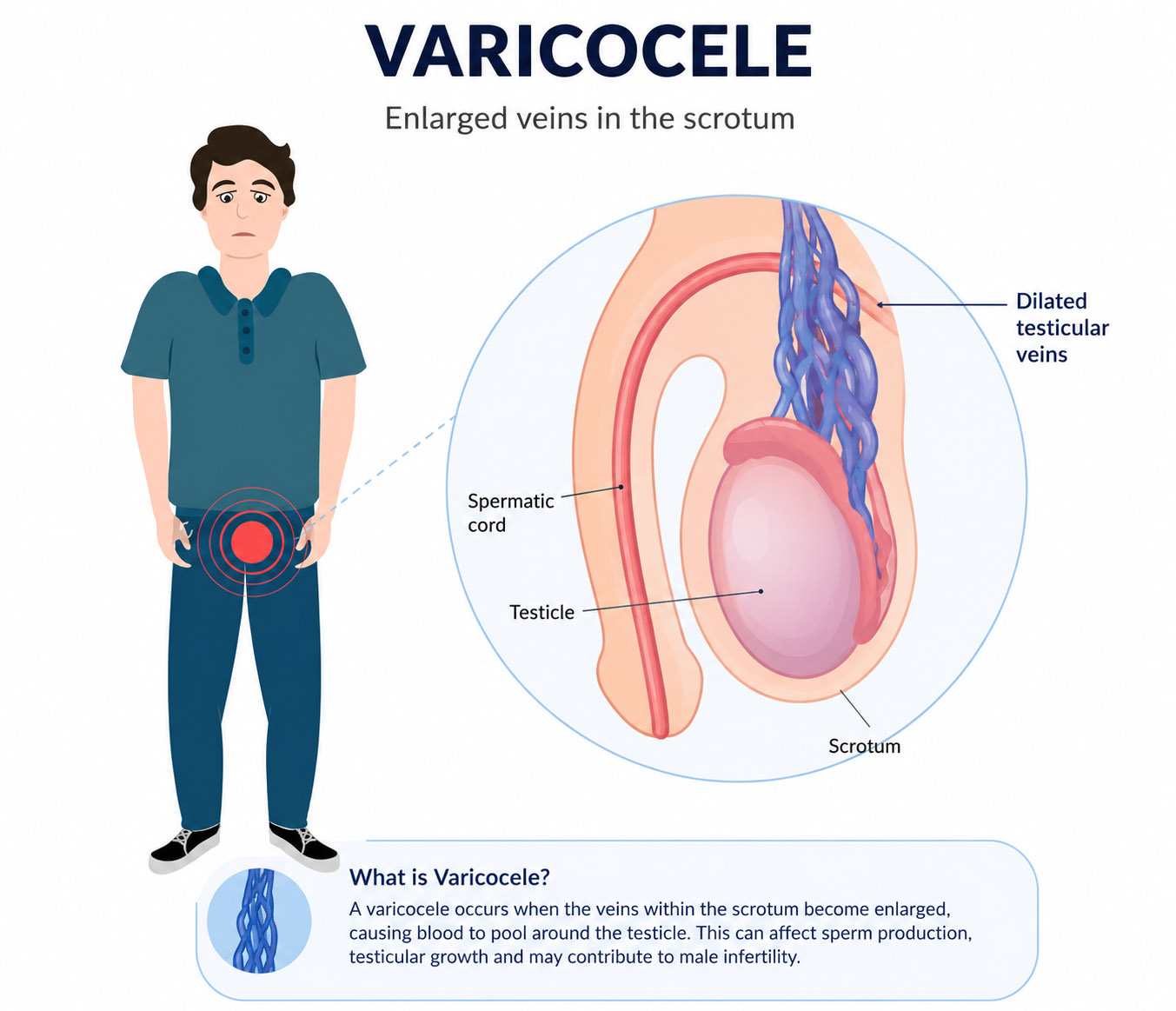
Varicocele surgery, also known as varicocelectomy, is a procedure performed to treat a varicocele (link to service page), an enlargement of the veins within the scrotum that drain blood from the testicles. Similar to varicose veins in the legs, these enlarged veins can cause blood to pool around the testicle, increasing its temperature and potentially affecting sperm production and testicular function.
The aim of varicocele surgery is to seal or divide the abnormal veins, allowing blood to drain through healthy veins instead. By improving blood circulation around the testicle, the procedure may help create a healthier environment for sperm production and relieve symptoms associated with a varicocele.
Varicocelectomy is most commonly performed using a microsurgical technique, which uses a surgical microscope to provide enhanced visualisation of the blood vessels. This approach allows the surgeon to precisely treat the affected veins while preserving nearby arteries, lymphatic vessels and other important structures.
The goals of varicocele surgery include:
- Improving sperm production and semen quality in suitable patients
- Increasing the chances of natural conception or assisted fertility treatment
- Relieving persistent scrotal pain or discomfort caused by a varicocele
- Preserving or improving testicular function
When is Varicocele Surgery Recommended?
Varicocele surgery is not necessary for every man with a varicocele. Treatment is generally considered when the condition is causing symptoms or is believed to be contributing to fertility problems. A thorough evaluation by a urologist is important to determine whether surgery is likely to be beneficial.
Varicocele surgery may be recommended for men who have:
- Male infertility associated with a clinically significant varicocele
- Abnormal semen analysis, such as reduced sperm count, motility or morphology
- Persistent scrotal pain or discomfort that does not improve with conservative measures
- Testicular atrophy (shrinkage of the affected testicle)
- A varicocele that is believed to be contributing to difficulty conceiving
The decision to proceed with surgery is based on your symptoms, physical examination findings, fertility goals and overall clinical assessment.
Watch Dr Joe Lee explain the different surgical treatment options available for male infertility, including when varicocele surgery may be considered as part of an individualised fertility treatment plan.
@drjollyurology Improve Male Fertility with Surgery! From varicocele fixes to sp*rm retrieval, Dr Joe shares how surgeries can help. 👨⚕️ #urology #doctor #menshealth #fyp #fertility #fertilityjourney
♬ original sound - Dr Joe Lee | Urology - Dr Joe Lee | Urology
Types of Varicocele Surgery
Several surgical techniques can be used to repair a varicocele. The most appropriate approach depends on the patient’s condition, the surgeon’s assessment and individual treatment goals.
- Microsurgical Varicocelectomy — This is the most commonly performed and preferred technique. A small incision is made in the groin, and a surgical microscope is used to identify and seal the enlarged veins while preserving the arteries, lymphatic vessels, and vas deferens.
- Laparoscopic Varicocelectomy — This minimally invasive technique uses small abdominal incisions and a camera to access and treat the affected veins. Although effective, it is generally performed less frequently than the microsurgical approach.
- Open Varicocelectomy — Traditional open surgery may also be performed in selected situations. However, it has largely been replaced by microsurgical techniques because they offer improved visualisation and may reduce the risk of complications and recurrence.
Microsurgical varicocelectomy is widely regarded as the preferred technique because it provides excellent visualisation of the blood vessels while helping preserve important surrounding structures, which may reduce complications and lower the likelihood of recurrence.
What to Expect During Varicocele Surgery
Before Surgery
Before the procedure, your urologist will perform a comprehensive assessment to determine whether varicocele surgery is appropriate for you. This may include:
- Reviewing your medical history and symptoms
- Performing a physical examination
- Arranging a scrotal ultrasound if additional evaluation is needed
- Conducting a semen analysis to assess sperm quality
- Discussing your fertility goals and treatment options
- Providing pre-operative instructions, including fasting and medication guidance
During Surgery
Varicocelectomy is usually performed as a day surgery under general anaesthesia. During the procedure, your surgeon will:
- Make a small incision, typically in the groin region
- Identify the enlarged veins supplying the varicocele
- Carefully seal or divide the affected veins
- Preserve the arteries, lymphatic vessels and vas deferens
- Redirect blood flow through healthy veins before closing the incision
- The procedure generally takes about one to two hours, depending on the surgical approach and individual anatomy.
After Surgery
Most patients return home on the same day after a short recovery period.
Following surgery, you can generally expect:
- Mild pain, swelling or bruising around the incision site
- Temporary use of scrotal support for comfort
- A gradual return to light daily activities within a few days
- Avoidance of strenuous exercise and heavy lifting for several weeks
- A follow-up appointment to monitor healing
- Repeat semen analysis after several months if fertility improvement is being assessed
Benefits of Varicocele Surgery
For appropriately selected patients, varicocele surgery may provide several important benefits, particularly for fertility and symptom relief. Potential benefits include:
- Improved blood flow around the testicle — Sealing the enlarged veins redirects blood through healthy veins, reducing venous congestion and improving circulation.
- Better sperm quality — In suitable patients, varicocele repair may improve sperm count, motility (movement) and morphology (shape), which can enhance male fertility.
- Enhanced fertility potential — Improved semen parameters may increase the chances of natural conception or support assisted reproductive treatments such as IVF or ICSI when needed.
- Relief from persistent discomfort — Surgery may reduce or eliminate chronic scrotal pain or a feeling of heaviness caused by the varicocele.
- Preservation of testicular function — Restoring a healthier testicular environment may help protect sperm-producing tissue and support long-term testicular health.
- Minimally invasive day surgery — Microsurgical varicocelectomy is typically performed as a day procedure, allowing most patients to return home the same day and resume normal activities after a relatively short recovery period.
Risks and Limitations of Varicocele Surgery
Varicocele surgery is generally considered a safe procedure when performed by an experienced urologist. However, like any surgical procedure, it carries some risks, and individual outcomes may vary.
Potential risks and limitations include:
- Pain or swelling — Mild discomfort and swelling around the incision site are common during the first few days after surgery and usually improve with time.
- Bruising — Temporary bruising around the groin or scrotum may occur as part of the normal healing process.
- Infection — Although uncommon, infection can develop at the incision site and may require treatment with antibiotics.
- Hydrocele formation — Fluid may occasionally accumulate around the testicle (hydrocele), which may require further treatment if it becomes symptomatic.
- Varicocele recurrence — In some cases, the treated varicocele may recur if not all abnormal veins are successfully sealed.
- Injury to surrounding structures — Rarely, nearby arteries, lymphatic vessels or other structures may be affected during surgery, although this risk is minimised with microsurgical techniques.
- Variable fertility improvement — While many men experience improved semen quality after surgery, the degree of improvement differs between individuals and depends on factors such as age, the severity of the varicocele and underlying fertility issues.
- Pregnancy cannot be guaranteed — Although varicocelectomy may improve fertility potential, successful pregnancy depends on multiple male and female factors and cannot be guaranteed by surgery alone.
Your urologist will discuss the potential benefits, risks, and expected outcomes based on your individual condition before recommending surgery.
What Results Can Patients Expect from Varicocele Surgery?
The outcomes of varicocele surgery vary depending on the severity of the varicocele, the underlying cause of infertility, and individual patient factors. For appropriately selected patients, the procedure can improve both fertility potential and symptoms.
Following varicocele surgery, patients may experience:
- Improved semen quality — Many men experience improvements in sperm count, motility, and morphology following successful repair.
- Gradual improvement over time — Because sperm production takes approximately three months, improvements in semen parameters are typically seen several months after surgery rather than immediately.
- Improved fertility potential — Better semen quality may increase the chances of natural conception or improve outcomes with assisted reproductive techniques when required.
- Relief from pain or discomfort — Men undergoing surgery for symptomatic varicoceles often experience a reduction in scrotal pain or heaviness after recovery.
- Individual results vary — Not every patient will experience the same degree of improvement, and outcomes depend on factors such as age, fertility history and overall reproductive health.
- Ongoing follow-up — Repeat semen analysis and follow-up consultations help assess recovery and determine whether additional fertility treatment is needed.
While varicocele surgery can improve fertility potential and relieve symptoms in many suitable patients, your urologist will discuss realistic expectations based on your individual circumstances.
Summary
Varicocele surgery (varicocelectomy) is a procedure used to treat enlarged veins within the scrotum that may contribute to male infertility, persistent scrotal discomfort or reduced testicular function. By sealing the affected veins and redirecting blood flow through healthy vessels, the procedure aims to improve the environment around the testicle, potentially enhancing sperm quality, relieving symptoms and preserving long-term testicular health.
Microsurgical varicocelectomy is widely regarded as the preferred surgical approach because it allows precise treatment of the abnormal veins while preserving important surrounding structures. Although outcomes vary between individuals, many suitable patients experience improvements in semen parameters, fertility potential or pain following surgery.
If you have been diagnosed with a varicocele or are concerned about male infertility, schedule a consultation with Dr Joe Lee to determine whether varicocele surgery may be an appropriate treatment option for you.