


| Treatment | Delayed & Premature Ejaculation Treatment |
|---|---|
| Also known as | Ejaculatory disorder treatment; may involve medication, topical treatments, behavioural or psychosexual therapy, and treatment of underlying medical or sexual conditions |
| Used for | Premature ejaculation (PE), delayed ejaculation (DE) and difficulty controlling or achieving ejaculation |
| How it works | Treatment is tailored to the type and cause of the ejaculatory problem and may aim to delay ejaculation, improve ejaculatory control, address difficulty reaching ejaculation or treat an underlying condition |
| Treatment options | Oral medication, topical anaesthetic treatment, behavioural and psychosexual approaches, medication review and treatment of contributing medical or sexual conditions |
| Treatment setting | Usually outpatient |
| Treatment duration | Varies according to the type, underlying cause and response to treatment |
| Suitable for | Men with persistent or recurrent difficulties with the timing or control of ejaculation that cause distress or interfere with sexual function or relationships |
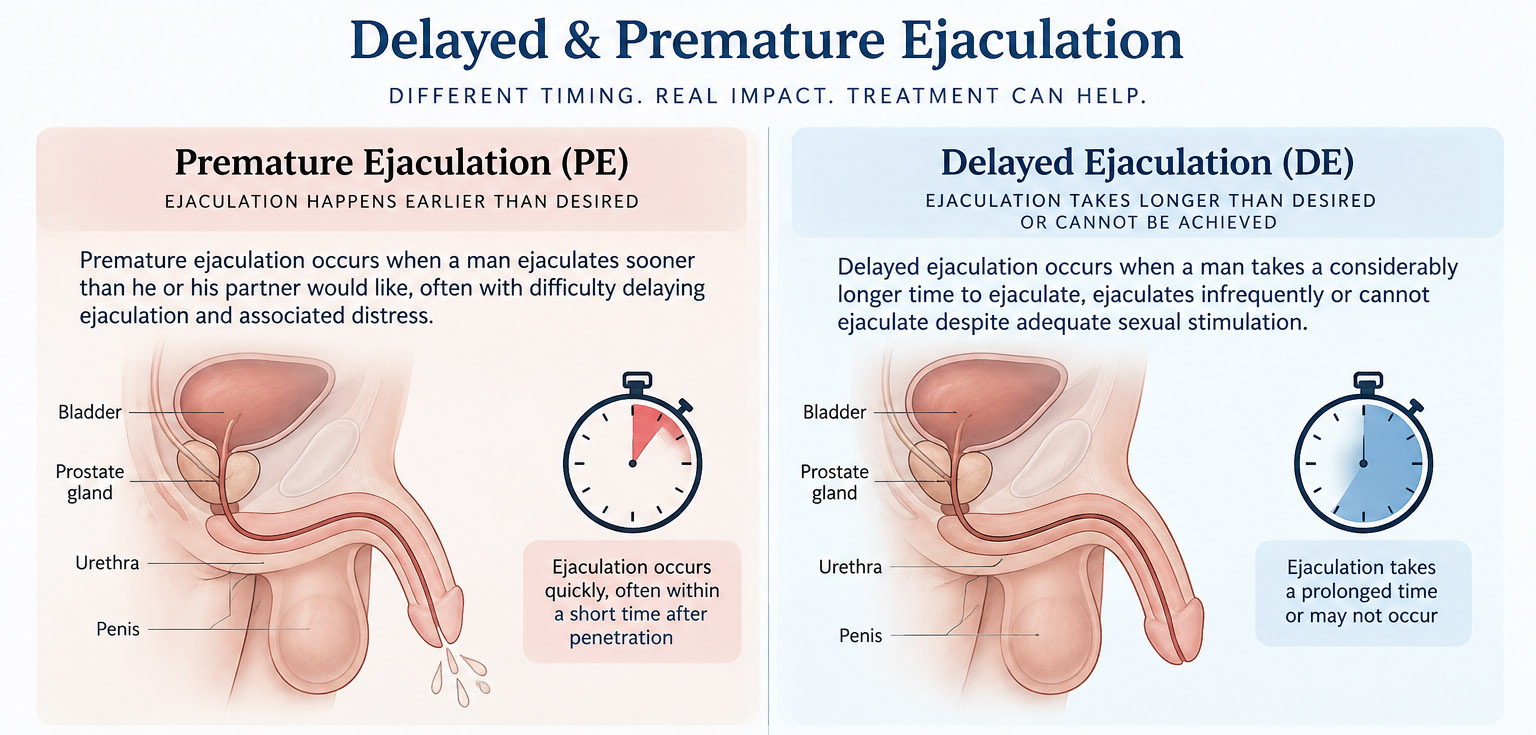
What is Premature and Delayed Ejaculation?
Ejaculation is a normal part of the male sexual response, but difficulties can occur when ejaculation consistently happens much earlier or later than desired. Premature ejaculation (PE) is characterised by ejaculation that occurs very early during sexual activity, with little perceived ability to delay it, together with associated distress. PE may be lifelong, beginning from a man’s earliest sexual experiences, or acquired after a period of previously satisfactory ejaculatory control.
Delayed ejaculation (DE) occurs when ejaculation takes considerably longer than desired, occurs infrequently or cannot be achieved despite adequate sexual stimulation. Like PE, it may be lifelong or acquired and may occur in all sexual situations or only under particular circumstances.
Both conditions can affect sexual satisfaction and may cause frustration, anxiety or difficulties within a relationship. Because ejaculatory problems can have physical, psychological, medication-related and sexual causes, identifying the type of disorder and possible contributing factors is important before treatment is recommended.
What Causes Premature or Delayed Ejaculation?
There is not always a single identifiable cause of an ejaculatory disorder. Premature and delayed ejaculation may involve different biological, psychological and relationship-related factors, and acquired symptoms can sometimes develop because of another medical or sexual condition.
Potential contributing factors include:
- Psychological factors — Performance anxiety, stress, psychological distress and relationship difficulties may contribute to problems with ejaculatory timing or control.
- Erectile dysfunction — Erectile difficulties may coexist with premature ejaculation, and concern about achieving or maintaining an erection can affect ejaculatory control. When acquired PE occurs alongside erectile dysfunction, addressing the erectile problem may form an important part of treatment.
- Hormonal or endocrine conditions — Hormonal abnormalities may contribute to ejaculatory difficulties in some men.
- Neurological conditions — Disorders or injuries affecting the nerves involved in sexual response may interfere with ejaculation.
- Certain medications — Some antidepressants and other medications can affect the timing or ability to ejaculate, particularly in men with delayed ejaculation.
- Prostate or genitourinary conditions — Prostatitis and other genitourinary conditions may contribute to acquired ejaculatory difficulties in some men.
- Sexual stimulation and behavioural factors — Patterns of sexual stimulation, arousal and learned sexual behaviours may contribute to delayed ejaculation in some patients.
The possible causes differ between individuals. A detailed sexual and medical history therefore helps identify factors that may be contributing to the problem and guides appropriate treatment.
When Should You Seek Treatment for Ejaculatory Problems?
Occasionally ejaculating sooner or taking longer to ejaculate does not necessarily indicate an ejaculatory disorder. Treatment is generally considered when the problem is persistent or recurrent and causes distress, affects sexual satisfaction or interferes with a relationship.
You may benefit from an assessment if you experience:
- Persistent premature ejaculation — Ejaculation repeatedly occurs sooner than desired and you have difficulty delaying it.
- Reduced control over ejaculation — You consistently feel unable to control when ejaculation occurs during sexual activity.
- Persistent difficulty reaching ejaculation — Ejaculation takes considerably longer than desired despite adequate stimulation and arousal.
- Inability to ejaculate — You are unable to ejaculate during partnered sexual activity or in other sexual situations.
- A recent change in ejaculatory function — Ejaculation has become noticeably earlier or more difficult after previously normal sexual function.
- Associated erectile difficulties — Problems with ejaculation occur alongside difficulty achieving or maintaining an erection.
- Distress or relationship difficulties — The problem is affecting sexual confidence, intimacy, satisfaction or your relationship with your partner.
A urological assessment can help distinguish an ejaculatory disorder from normal variation and identify medical, sexual or medication-related factors that may require treatment.
Treatment Options for Premature Ejaculation
Treatment for premature ejaculation depends on whether the condition is lifelong or acquired, whether another sexual or medical condition is contributing, and your individual symptoms and treatment preferences. Current EAU guidance recommends addressing erectile dysfunction, other sexual dysfunction or genitourinary infection first when these contribute to PE.
Treatment options may include:
- Oral medication — Dapoxetine is a short-acting selective serotonin reuptake inhibitor (SSRI) used on demand for PE in countries where it is approved. Other SSRIs and clomipramine may also be used off-label in selected patients. These medications can increase the time before ejaculation and improve ejaculatory control.
- Topical anaesthetic treatment — Lidocaine/prilocaine preparations reduce penile sensitivity and can help delay ejaculation. Appropriate application is important to reduce unwanted numbness and transfer of the medication to a partner.
- Behavioural techniques — Approaches such as start-stop exercises may help some men develop greater awareness and control over ejaculation.
- Psychosexual therapy — Psychological or couple-based approaches may help address performance anxiety, sexual confidence, relationship factors and distress associated with PE. They may be used alongside medical treatment.
- Treatment of an underlying condition — If acquired PE is associated with erectile dysfunction, prostatitis, anxiety, thyroid disease or another contributing condition, treating that problem may form an important part of management.
The appropriate treatment may involve one approach or a combination of treatments. When premature ejaculation occurs alongside erectile dysfunction, treatment may also need to address the erectile problem as part of the overall management plan.
Watch Dr Joe Lee discuss oral medications used to treat erectile dysfunction, which may require treatment alongside premature ejaculation when the two conditions occur together.
@drjollyurology Not everyone responds the same way to quick fixes. Find out more! 👀 urology menshealthawareness doctorsoftiktok fyp EDawareness
♬ original sound - Dr Joe Lee | Urology - Dr Joe Lee | Urology
Treatment Options for Delayed Ejaculation
Treatment of delayed ejaculation differs from treatment of PE and is directed primarily towards identifying and addressing contributing factors. Unlike PE, there is currently no consistently effective medication specifically approved for delayed ejaculation, and treatment needs to be individualised.
Treatment may include:
- Medication review — If a medication is contributing to delayed ejaculation, your doctor may discuss whether the dose or treatment can safely be adjusted or whether an alternative may be appropriate. Medication should not be stopped or changed without medical advice.
- Treatment of underlying medical conditions — Hormonal, neurological or other medical factors that contribute to delayed ejaculation may require appropriate investigation and management.
- Treatment of associated erectile dysfunction — If delayed ejaculation occurs alongside erectile dysfunction, treatment of the erectile problem may improve overall sexual function.
- Psychosexual therapy — Therapy may help when anxiety, relationship difficulties, sexual expectations or patterns of sexual stimulation contribute to the problem.
- Changes in sexual stimulation or technique — Where relevant, treatment may involve reviewing patterns of stimulation and helping the patient identify forms of sexual stimulation that better support arousal and ejaculation.
Because delayed ejaculation can arise from several different mechanisms, treatment is directed towards the patient’s individual contributing factors rather than following a single standard treatment pathway.
What to Expect During Treatment for Ejaculatory Disorders
Treatment begins with identifying whether the problem is premature ejaculation, delayed ejaculation or another form of sexual dysfunction. Your urologist will assess when the problem began, how consistently it occurs and whether medical, psychological or medication-related factors may be contributing.
Before Treatment
- Consultation — Your symptoms, sexual history, medical history and treatment goals are discussed in detail.
- Assessment of ejaculatory function — Your doctor will ask about the timing of ejaculation, perceived control, ability to reach orgasm and situations in which the problem occurs.
- Review of onset and pattern — Determining whether the condition is lifelong or acquired, and generalised or situational, can help guide treatment.
- Assessment of erectile function — Erectile difficulties and other sexual symptoms are assessed because they may coexist with or contribute to an ejaculatory disorder.
- Medication review — Current medications are reviewed to identify drugs that may affect ejaculation.
- Physical examination — A focused examination may be performed where appropriate to identify anatomical or other physical findings associated with sexual dysfunction.
- Additional investigations where indicated — Routine laboratory testing is not necessary for every patient with PE, but blood tests or other investigations may be performed when the medical history or examination suggests an underlying condition.
- Discussion of treatment options — The available approaches, expected benefits, possible side effects and limitations are discussed before treatment begins.
Watch Dr Joe Lee discuss how erectile dysfunction can be assessed using an ED questionnaire as part of evaluating male sexual function.
@drjollyurology Is it ED or not? 🤔 📝 Take the 5-question ED test to see where you stand and what it means for your s*xual health. urology doctor menshealth fyp EDawareness questionnaire
♬ original sound - Dr Joe Lee | Urology - Dr Joe Lee | Urology
During Treatment
Treatment is tailored according to the diagnosis and underlying contributing factors. During treatment, your doctor may:
- Prescribe appropriate medication — Medication may be considered for PE or to address an underlying condition contributing to the ejaculatory problem.
- Recommend topical treatment for PE — A topical anaesthetic may be prescribed to reduce penile sensitivity and delay ejaculation.
- Address contributing conditions — Erectile dysfunction, hormonal abnormalities, genitourinary conditions or other identified factors may be treated where appropriate.
- Recommend behavioural or psychosexual approaches — These may be used alone in selected circumstances or alongside medical treatment.
- Adjust treatment according to response — The treatment plan may be modified if symptoms do not improve sufficiently or side effects occur.
Follow-Up
Regular follow-up allows your doctor to assess whether treatment is improving ejaculatory function and sexual well-being.
You can generally expect:
- Assessment of symptom improvement — Changes in ejaculatory timing, control and associated distress are reviewed.
- Review of medication response — If medication is prescribed, its effectiveness and potential side effects are assessed.
- Adjustment of treatment — Dosage, medication or other aspects of treatment may be modified according to your response.
- Management of contributing factors — Any associated sexual or medical conditions continue to be reviewed and treated where appropriate.
- Ongoing discussion of treatment goals — Treatment is adjusted according to whether meaningful improvement in sexual function and satisfaction has been achieved.
Benefits of Treating Premature and Delayed Ejaculation
Effective treatment aims to improve the specific ejaculatory difficulty while reducing the effect it has on sexual function and quality of life. Potential benefits include:
- Improved control over ejaculation — PE treatment may help increase the ability to delay ejaculation during sexual activity.
- Longer time before ejaculation — Appropriate treatment can increase ejaculatory latency in men with PE.
- Improved ability to reach ejaculation — When a contributing cause of delayed ejaculation can be identified and addressed, treatment may make ejaculation easier to achieve.
- Reduced sexual distress — Managing the ejaculatory problem may reduce frustration, embarrassment or anxiety associated with sexual activity.
- Improved sexual satisfaction — Better management of ejaculatory timing may improve sexual experiences for the patient and, where relevant, their partner.
- Treatment of contributing conditions — Assessment may identify erectile dysfunction, medication effects or another health problem that can be managed as part of treatment.
- Individualised treatment — Management can be adapted according to whether the problem is lifelong or acquired, the underlying cause and individual treatment goals.
The extent of improvement varies between individuals and depends on the type of ejaculatory disorder and the factors contributing to it.
Risks and Limitations of Ejaculation Disorder Treatment
Treatment is generally well tolerated when appropriately selected, but potential risks and limitations depend on the treatment used. These may include:
- Medication side effects — Medicines used for PE can cause adverse effects such as nausea, dizziness, headache, gastrointestinal symptoms or changes in sexual function, depending on the medication prescribed.
- Temporary penile numbness — Topical anaesthetics used for PE reduce penile sensitivity and may cause temporary numbness.
- Transfer of topical medication to a partner — Topical anaesthetic can potentially reduce a partner’s genital sensation if transferred during sexual contact. Following application instructions can help reduce this risk.
- Treatment response varies — A treatment that works well for one patient may provide limited benefit for another.
- Symptoms may return after treatment is stopped — Some PE treatments manage ejaculatory timing while they are being used rather than permanently changing the underlying tendency towards early ejaculation.
- Delayed ejaculation can be difficult to treat — DE has multiple potential causes and currently lacks a single established pharmacological treatment that is consistently effective.
- Underlying conditions may require separate treatment — Ejaculatory difficulties caused by erectile dysfunction, hormonal problems, neurological disease or medication effects may not improve until the contributing factor is addressed.
- Psychosexual treatment requires active participation — Behavioural and psychosexual approaches may require time, practice and, in some cases, involvement of the patient’s partner.
Your urologist will discuss the expected benefits and limitations of the recommended approach according to your diagnosis and individual circumstances.
What Results Can Patients Expect from Treatment?
The goal of treatment depends on the type of ejaculatory disorder. For premature ejaculation, treatment generally aims to increase ejaculatory control, extend the time before ejaculation and reduce associated distress. For delayed ejaculation, treatment focuses on addressing contributing factors and improving the ability to reach ejaculation where possible. Following treatment, patients may experience:
- Better ejaculatory control — Men receiving effective PE treatment may find it easier to delay ejaculation.
- Increased time before ejaculation — Pharmacological and topical treatments can increase ejaculatory latency in appropriately selected men with PE.
- Improvement in sexual confidence and satisfaction — Reduced concern about ejaculatory timing may make sexual activity less stressful and more satisfying.
- Improvement after addressing an underlying cause — Acquired ejaculatory difficulties may improve when contributing medical, medication-related or sexual factors can be successfully treated.
- Gradual improvement with behavioural or psychosexual treatment — These approaches may require repeated practice and time before meaningful changes are noticed.
- Individual variation in response — Outcomes depend on the type of ejaculatory disorder, its underlying causes and the treatment used.
- Possible need for ongoing treatment — Some patients require continued medication, behavioural strategies or management of an underlying condition to maintain improvement.
Regular follow-up allows treatment to be adjusted according to response and helps determine whether the chosen approach remains appropriate.
Summary
Premature ejaculation and delayed ejaculation are disorders of ejaculatory timing that can interfere with sexual satisfaction, confidence and relationships. Premature ejaculation involves ejaculation occurring earlier than desired with reduced ability to delay it, while delayed ejaculation involves persistent difficulty or an extended time required to ejaculate despite adequate sexual stimulation.
Treatment differs according to the type and cause of the problem. PE may be treated with oral medication, topical anaesthetics, behavioural or psychosexual approaches and management of contributing conditions. Treatment for DE focuses primarily on identifying and addressing factors such as medications, medical conditions, erectile dysfunction and psychosexual or stimulation-related factors.
A detailed assessment helps determine the type of ejaculatory disorder and allows treatment to be tailored to your symptoms, health and treatment goals.
If premature or delayed ejaculation is affecting your sexual function or quality of life, schedule a consultation with Dr Joe Lee for an assessment and to discuss the treatment options that may be appropriate for you.