


| Definition | Premature ejaculation involves ejaculation that occurs sooner than desired with reduced control and associated distress, while delayed ejaculation refers to persistent difficulty or marked delay in reaching ejaculation. |
| Causes | Psychological, relationship, neurological, hormonal, medication-related, urological and lifestyle factors. Several causes may coexist. |
| Symptoms | Ejaculating sooner than desired, difficulty controlling ejaculation, taking an unusually long time to ejaculate or being unable to ejaculate during sexual activity |
| Diagnosis | Detailed medical and sexual history, assessment of ejaculation patterns and contributing factors, physical examination and selected investigations where appropriate |
| Treatment | Depends on the type and underlying cause and may include behavioural or psychosexual approaches, prescription medication, topical treatments, management of contributing medical conditions and adjustment of causative medications |
Most importantly, erectile dysfunction is treatable, and the right approach depends on what is causing the problem.
Delayed & Premature Ejaculation
Ejaculation does not always happen in the way a man expects. Some men find that they reach ejaculation much sooner than they would like and feel they have little control over it. Others may have the opposite experience, where sexual activity continues for a long time without ejaculation or ejaculation may not happen at all.
Both can be frustrating, particularly when the problem starts affecting confidence, intimacy or the relationship.
Premature ejaculation and delayed ejaculation are different conditions and neither should be diagnosed simply by looking at a stopwatch. How often the problem occurs, whether it has always been present or developed later, how much control a man feels he has and whether it causes distress are all important parts of the assessment.
What Are Premature and Delayed Ejaculation?
The process is a coordinated process involving the nervous system, pelvic muscles, sexual stimulation and several physiological pathways. Problems can occur when ejaculation happens too quickly, takes unusually long or does not occur:
Premature ejaculation | Premature ejaculation (PE) is more than simply ejaculating quickly. It generally involves ejaculation that occurs sooner than desired, together with a persistent or recurrent lack of control and associated personal or interpersonal distress. Lifelong PE usually occurs from the beginning of a man's sexual experiences, while acquired PE develops after a period in which ejaculation was previously satisfactory. For some men with lifelong PE, ejaculation occurs before or around one minute after penetration on most occasions. However, ejaculation time alone does not establish the diagnosis. Control, distress and the pattern of symptoms are equally important. |
Delayed ejaculation | Delayed ejaculation (DE) is almost the opposite problem. A man may require a prolonged period of sexual stimulation before he can ejaculate or may be unable to ejaculate during partnered sex despite having an erection and experiencing sexual desire. There is no single number of minutes that automatically defines delayed ejaculation. A significant change from a man's previous sexual function can be important, particularly when the difficulty occurs repeatedly and causes distress. Delayed ejaculation can also be lifelong, acquired or situational. For example, some men may be able to ejaculate during masturbation but have difficulty reaching ejaculation with a partner. Understanding this difference can provide useful clues about what is contributing to the problem. |
What Is the Difference Between Ejaculation and Orgasm?
Ejaculation and orgasm usually happen together, but they are not the same physiological event.
Ejaculation refers to the release of semen from the penis. Orgasm is the pleasurable sensation associated with sexual climax. A man may therefore experience an orgasm with little or no semen or have difficulty ejaculating despite being sexually aroused.
This distinction becomes particularly relevant when assessing delayed ejaculation, anejaculation and some fertility concerns.
What Causes Premature Ejaculation?
There is rarely one single explanation for premature ejaculation. The factors involved can differ between men and psychological and physical factors may occur together.
Psychological and sexual factors
- Performance anxiety – worrying about ejaculating too quickly can increase tension and make it harder to regulate arousal
- Stress and emotional distress – ongoing stress can affect sexual response and concentration during intimacy
- Relationship difficulties – conflict, communication problems or changes in intimacy can contribute to sexual difficulties
- Previous sexual experiences – patterns established earlier in life may influence ejaculation control
- Fear of losing the erection – some men may rush sexual activity because they are concerned that their erection will disappear
Physical and medical factors
- Erectile dysfunction – difficulty maintaining an erection can sometimes lead a man to rush towards ejaculation
- Prostate or genitourinary conditions – inflammation or other urological problems may contribute in some men
- Hormonal or neurological factors – changes affecting sexual signalling may play a role in selected cases
- Certain medications or substances – medication effects and substance use may influence sexual function
What Causes Delayed Ejaculation?

Delayed ejaculation can be particularly frustrating because a man may remain interested in sex and maintain an erection, yet still find that ejaculation does not happen.
Several factors may contribute.
Medication-related causes
Certain medicines are well recognised contributors to delayed ejaculation, including some:
- Antidepressants, particularly selective serotonin reuptake inhibitors (SSRIs)
- Antipsychotic medications
- Some blood pressure medications
- Alpha-blockers
- Antiandrogen medications
- Other medicines that affect the nervous system or sexual response
Neurological and medical conditions
Conditions affecting the nerves involved in ejaculation can interfere with the normal ejaculatory response. These include:
- Diabetes, particularly when it has caused nerve damage
- Spinal cord disorders or injury
- Multiple sclerosis
- Pelvic or abdominal surgery involving relevant nerves
- Certain neurological diseases
Hormonal factors
Hormonal problems can sometimes contribute to delayed ejaculation, particularly when associated with other symptoms.
These may include:
- Low testosterone
- Thyroid disorders
- Abnormal prolactin levels
- Other endocrine disturbances
Psychological and relationship factors
Sexual function is influenced by more than physical stimulation.
Anxiety, depression, relationship difficulties, unresolved sexual concerns and emotional distress can all affect the ability to reach orgasm and ejaculation. Some men may also become accustomed to a particular form, pressure or speed of masturbation that is difficult to reproduce during partnered sex.
This does not mean that delayed ejaculation is "all in your head". Psychological and physical factors can coexist and both may need to be considered during assessment.
Alcohol and lifestyle factors
Heavy alcohol use can interfere with the nervous system and sexual response. Poor sleep, chronic stress and other lifestyle factors may also affect sexual function indirectly.
What Are the Signs of Premature Ejaculation?
PE may present differently from one man to another, but common concerns include:
- Ejaculating sooner than desired – ejaculation occurs before the man would like it to
- Limited control – difficulty delaying ejaculation despite wanting to do so
- Persistent or recurrent pattern – the problem happens repeatedly rather than occasionally
- Sexual dissatisfaction – the man or his partner feels that sexual activity is being interrupted too early
- Distress or loss of confidence – repeated experiences may lead to anxiety, embarrassment or avoidance of intimacy
What Does Delayed Ejaculation Feel Like?
Men with delayed ejaculation may describe experiences such as:
- Taking a very long time to ejaculate, even with adequate sexual stimulation
- Being unable to ejaculate during intercourse
- Being able to ejaculate during masturbation but not with a partner
- Needing a very specific type of stimulation to reach orgasm
- A noticeable change from previous sexual function
- Feeling frustrated, tired or pressured during sex
Some men may still have a normal erection and sexual desire. This is one reason delayed ejaculation should not automatically be assumed to be erectile dysfunction.
Who Is at Risk of Premature and Delayed Ejaculation?
Potential problems can affect men at different stages of life. Some factors may increase the likelihood of developing premature or delayed ejaculation, although having one or more of these factors does not necessarily mean that a man will develop a sexual disorder.
RISK FACTORS | PREMATURE EJACULATION | DELAYED EJACULATION |
Sexual/psychological | Performance anxiety, stress, relationship factors | Anxiety, depression, stimulation patterns |
Medical | ED, selected genitourinary conditions | Diabetes, neurological conditions, hormonal abnormalities |
Medication | Selected medicines/substances | SSRIs and other medicines more commonly implicated |
Previous surgery | Less typical | Pelvic/prostate surgery may contribute |
Can Premature or Delayed Ejaculation Happen Alongside Erectile Dysfunction?
A man can experience more than one sexual problem at the same time. Erectile dysfunction, reduced sexual desire and ejaculation disorders may overlap and one problem can sometimes influence another.
For example, a man who is worried about losing his erection may rush during sexual activity, contributing to premature ejaculation. Conversely, repeated difficulty ejaculating may create anxiety that affects erection quality.
This is why an assessment should look at the overall sexual response rather than focusing on ejaculation in isolation.
When Should You Be Concerned About an Ejaculation Problem?
Not every variation in ejaculation requires treatment.
It is more worthwhile to seek medical assessment when the problem is persistent, happens repeatedly, represents a significant change from your previous sexual function or is affecting your confidence, relationship or sexual satisfaction.
A review is also particularly useful when ejaculation difficulties occur alongside:
- Erectile dysfunction
- Reduced libido
- Penile pain or curvature
- Urinary or prostate symptoms
- Diabetes or neurological disease
- Hormonal symptoms
- Infertility or difficulty conceiving
- A recent change in medication
The aim is not simply to measure how many minutes sex lasts. It is to understand what has changed and why.
How Are Premature and Delayed Ejaculation Diagnosed in Singapore?

There is no single test that can diagnose every ejaculation disorder. A detailed and confidential discussion about your sexual function is usually the starting point, followed by examination or investigations when appropriate.
- Medical and sexual history – a urologist may ask when the problem started, whether it has always been present or developed later, how often it occurs, whether ejaculation happens during masturbation, partnered sex or both, how much control you feel you have, how long ejaculation usually takes and whether your erections and sexual desire are normal. Your medications, supplements, alcohol use, medical history, previous surgery and relevant psychological or relationship factors may also be discussed. If fertility is a concern, this will be taken into consideration as well.
- Assessment of ejaculation pattern – for premature ejaculation, the assessment looks beyond ejaculation time alone. A urologist may consider how quickly ejaculation occurs, how much control you feel you have and whether the problem is causing personal or relationship distress. Questionnaires such as the Premature Ejaculation Diagnostic Tool (PEDT) may also be used to support the assessment.
- Physical examination – a physical examination may be recommended when symptoms suggest a neurological, hormonal, penile, testicular or other urological cause. The examination is guided by your medical history and symptoms rather than performed routinely in the same way for every man.
- Blood tests – blood tests are not necessary for every ejaculation disorder. When appropriate, investigations may include testosterone, blood glucose or HbA1c, thyroid function, prolactin and other tests based on your symptoms and medical history. The aim is to identify potentially treatable medical or hormonal factors rather than to order an unnecessarily broad panel of tests.
- Further investigations – additional tests may be considered when there is a specific concern, such as neurological disease, prostate or urinary problems, retrograde ejaculation or an underlying fertility issue. Most men with premature or delayed ejaculation do not require extensive investigations.
How Is Premature Ejaculation Treated in Singapore?

Treatment depends on whether premature ejaculation is lifelong or acquired, what factors are contributing to it and the individual's treatment goals.
- Addressing contributing conditions – if premature ejaculation occurs alongside erectile dysfunction, prostatitis or another genitourinary condition, treating the underlying problem may improve ejaculation control. For some men, improving erection quality may also reduce the tendency to rush sexual activity.
- Behavioural and psychosexual approaches – techniques such as start-stop exercises, arousal awareness, sexual education and mindfulness may help improve awareness and control. Psychosexual or couples counselling may also be useful when performance anxiety, relationship factors or learned sexual patterns are contributing.
- Prescription medication – depending on the individual, treatment may include dapoxetine, other SSRIs such as paroxetine, sertraline or fluoxetine or clomipramine. These medications can have side effects and are not suitable for everyone, so treatment should be guided by a medical assessment.
- Topical treatment – local anaesthetics such as lidocaine or lidocaine/prilocaine can reduce penile sensitivity and help delay ejaculation. They need to be used correctly to avoid excessive numbness or reduced sensation for either partner.
- Combination treatment – medication may be combined with behavioural or psychosexual approaches when appropriate, particularly when anxiety or learned sexual patterns are involved. The aim is not simply to prolong ejaculation, but to improve control, sexual satisfaction and confidence.
How Is Delayed Ejaculation Treated in Singapore?

Treatment for delayed ejaculation focuses on identifying and addressing the factors that may be interfering with ejaculation. The appropriate approach depends on the underlying cause and whether the problem occurs in all sexual situations or only in certain circumstances.
- Reviewing medications – certain medicines, particularly some antidepressants and other medications that affect the nervous system, can delay ejaculation. Our doctor may consider whether the medication can be adjusted or changed, but prescription medicines should not be stopped without medical advice.
- Treating underlying medical conditions – diabetes, neurological conditions, hormonal abnormalities and some urological conditions can affect ejaculation. Where a medical cause is identified, treating or managing the underlying condition may help improve sexual function.
- Addressing erectile dysfunction – delayed ejaculation can occur alongside erectile dysfunction. Where both problems are present, improving erection quality may help reduce anxiety and make sexual activity more comfortable and satisfying.
- Psychosexual therapy – anxiety, relationship difficulties and sexual expectations can sometimes contribute to delayed ejaculation. Psychosexual counselling may help address these factors, particularly when ejaculation is possible during masturbation but consistently difficult during partnered sex.
- Reviewing stimulation patterns – some men become accustomed to a particular type, pressure or speed of stimulation during masturbation that may be difficult to reproduce with a partner. Understanding these differences can help identify practical ways to improve sexual stimulation and ejaculation.
- Medication and other treatments – there is currently no universally established medication specifically approved for delayed ejaculation. Some medicines have been studied in selected cases, but evidence remains limited. Treatment is therefore generally directed towards the underlying cause rather than relying on a single medication or procedure.
Can Premature or Delayed Ejaculation Affect Fertility?
Ejaculation problems can sometimes interfere with conception, although they do not necessarily mean that a man is infertile.
Premature ejaculation may make intercourse more difficult in some couples, while severe delayed ejaculation or an inability to ejaculate may make it difficult to deposit semen during intercourse.
Fertility can also be affected by separate factors involving sperm production, hormones, the testes or the reproductive tract.
If you are trying to conceive and have persistent ejaculation difficulties, it is worth mentioning this during a urological assessment. Treatment can then take fertility goals into account rather than focusing only on sexual performance.
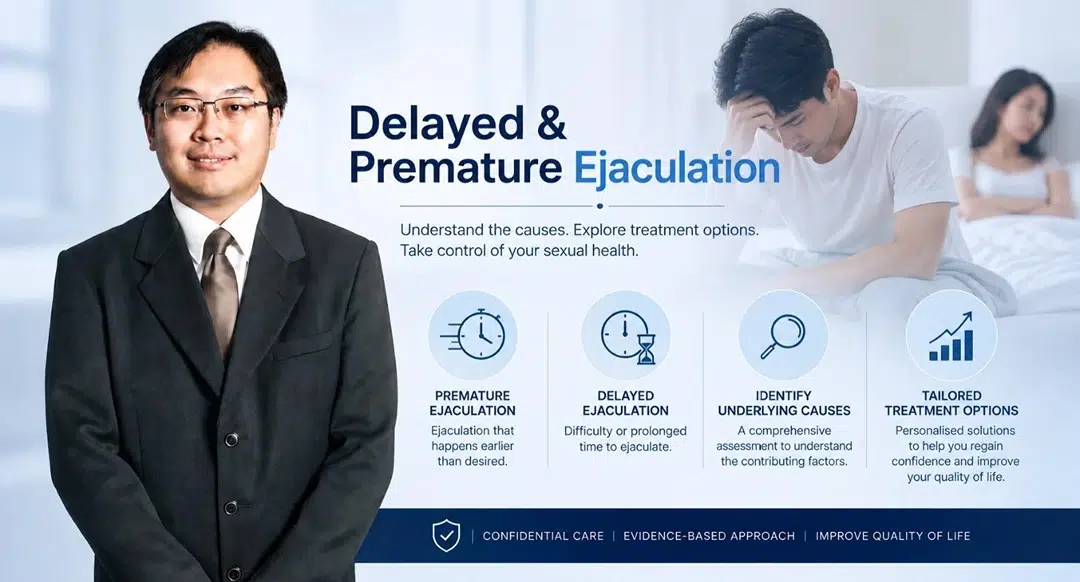
Why Choose an Andrology-Focused Urologist for Ejaculation Problems?
Frequently Asked Questions
The pattern can vary between individuals and occasional episodes may settle on their own. However, if ejaculation remains consistently difficult to control and is causing distress, an assessment can help identify contributing factors and available treatment options.