


| Treatment | Adult Circumcision |
|---|---|
| Also known as | Circumcision, adult circumcision surgery. Circumcision methods include, conventional circumcision, laser circumcision, stapler circumcision and shangring circumcision |
| Used for | Medical conditions affecting the foreskin, recurrent infections, hygiene concerns, or personal and religious reasons |
| How it works | The foreskin covering the head of the penis is surgically removed, leaving the glans permanently exposed. |
| Anaesthesia | Usually local anaesthesia with or without sedation, or general anaesthesia depending on the patient and procedure |
| Treatment setting | Day surgery |
| Recovery | Most patients resume light activities within several days, with complete healing typically taking several weeks |
| Suitable for | Adult men with medical indications or those choosing circumcision for personal, cultural or religious reasons |
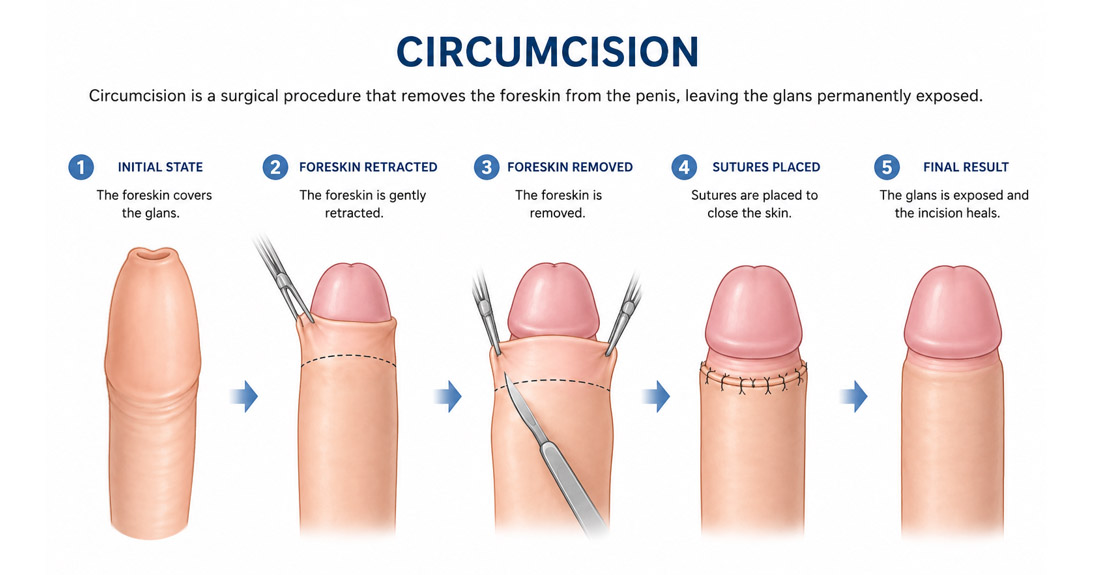
What is Adult Circumcision?
Adult circumcision is a surgical procedure that involves the permanent removal of the foreskin, the fold of skin covering the head (glans) of the penis. Once the foreskin is removed, the glans remains permanently exposed.
Although some men choose circumcision for personal, cultural or religious reasons, the procedure is also commonly performed to treat certain medical conditions affecting the foreskin. In appropriately selected patients, circumcision may help relieve symptoms, prevent recurrent foreskin problems and improve genital hygiene.
Circumcision methods include, conventional circumcision, laser circumcision, stapler circumcision and shangring circumcision. The different methods are applied based on patient anatomy, medical conditions and preference.
When is Adult Circumcision Recommended?
Adult circumcision may be recommended when the foreskin causes persistent symptoms, recurrent infections or other medical problems that do not improve with conservative treatment. The decision to proceed with surgery is based on your symptoms, examination findings and individual circumstances.
Adult circumcision may be recommended if you have:
- Phimosis (tight foreskin) — The foreskin cannot be fully retracted over the head of the penis, which may cause pain, difficulty with hygiene, recurrent infections or problems during sexual activity.
- Recurrent balanitis or balanoposthitis — Repeated inflammation or infection of the glans (balanitis) or both the glans and foreskin (balanoposthitis) despite appropriate treatment.
- Paraphimosis — The foreskin becomes trapped behind the head of the penis and cannot be returned to its normal position, potentially restricting blood flow and requiring prompt medical attention.
- Recurrent foreskin tears or scarring — Repeated tearing, thickening or scarring of the foreskin that causes discomfort or interferes with normal retraction.
- Personal, cultural or religious reasons — Some men choose circumcision based on personal preference or cultural and religious beliefs.
- Selected hygiene concerns — In some men, circumcision may make genital hygiene easier, particularly when recurrent foreskin problems make cleaning difficult.
The suitability of adult circumcision depends on the underlying condition and your individual needs. A consultation with a urologist can help determine whether circumcision is the most appropriate treatment option.
Watch Dr Joe Lee explain common reasons why adult circumcision may be recommended and what patients can expect from the procedure.
@drjollyurology ✂️ Cut or Uncut? The choice is personal, medical, and sometimes religious. Just remember: uncut needs extra hygiene! 🚿 #urology #doctor #menshealth #fyp #infertility #circumcision
♬ original sound - Dr Joe Lee | Urology - Dr Joe Lee | Urology
What to Expect During Adult Circumcision
Before Surgery
Before the procedure, your urologist will perform a thorough assessment to determine whether adult circumcision is appropriate and discuss the expected benefits, risks and recovery. This typically includes:
- Consultation — Discussion of your symptoms, medical history and reasons for considering circumcision.
- Medical history — Review of any previous foreskin problems, infections, medications, allergies and general health.
- Physical examination — Examination of the penis and foreskin to identify the underlying condition and plan the procedure.
- Discussion of treatment options — Your urologist will explain whether circumcision is the most appropriate treatment and discuss any suitable alternatives.
- Anaesthesia planning — The type of anaesthesia will be determined based on your individual circumstances and the planned procedure.
- Pre-operative instructions — Guidance will be provided regarding fasting, medications, hygiene, and preparation for surgery.
During Surgery
Adult circumcision is usually performed as a day procedure under local anaesthesia with or without sedation, or general anaesthesia. During the procedure, your surgeon will:
- Administer anaesthesia — The treatment area is numbed or you are placed under general anaesthesia to ensure comfort during the procedure.
- Separate the foreskin if required — Any adhesions between the foreskin and the glans are carefully released.
- Remove the foreskin — The appropriate amount of foreskin is surgically removed while preserving the surrounding structures. Circumcision methods include, conventional circumcision, laser circumcision, stapler circumcision and shangring circumcision. The different methods are applied based on patient anatomy, medical conditions and preference.
- Control bleeding — Small blood vessels are sealed to minimise bleeding during the procedure.
- Place dissolvable sutures — In conventional and laser circumcision, the remaining skin edges are carefully closed using absorbable stitches. In stapler circumcision this is achieved by small metal clips. In shangring circumcision, this is achieved by the inner and outer ring of the shangring device.
- Apply a dressing — A protective dressing is placed over the surgical site before you return to the recovery area.
After Surgery
Most patients return home on the same day following a short period of observation. Following adult circumcision, you can generally expect:
- A short observation period — You will be monitored briefly before being discharged.
- Same-day discharge — Adult circumcision is typically performed as a day surgery.
- Pain management — Mild discomfort, swelling or bruising is expected during the first few days and can usually be managed with prescribed medication.
- Wound care — You will receive instructions on keeping the surgical site clean and recognising signs of infection or delayed healing.
- Temporary activity restrictions — Strenuous exercise and sexual activity should be avoided until healing is sufficient and your surgeon advises it is safe.
- Follow-up appointment — Your urologist will review wound healing and ensure that your recovery is progressing as expected.
Benefits of Adult Circumcision
For appropriately selected patients, adult circumcision can provide both medical and practical benefits. Potential benefits include:
- Treats foreskin-related medical conditions — Circumcision provides a definitive treatment for conditions such as phimosis, recurrent balanitis, paraphimosis and recurrent foreskin scarring.
- May reduce recurrent infections — Removing the foreskin may lower the risk of repeated inflammation or infections affecting the foreskin and glans in suitable patients.
- Improves foreskin retraction — Because the foreskin is permanently removed, problems caused by a tight or scarred foreskin are resolved.
- May improve genital hygiene — Without the foreskin, cleaning the glans may be easier for some men, particularly those who have experienced recurrent foreskin problems.
- Permanent treatment — Once the foreskin has been removed, the underlying foreskin condition is unlikely to recur.
- Day surgery with relatively quick recovery — Adult circumcision is usually performed as a day procedure, allowing most patients to return home the same day and gradually resume normal activities as healing progresses.
Risks and Limitations of Adult Circumcision
Adult circumcision is generally considered a safe procedure when performed by an experienced urologist. However, as with any surgical procedure, it carries potential risks and limitations that should be discussed before treatment.
Potential risks and limitations include:
- Pain or discomfort — Mild pain or tenderness around the surgical site is common during the early stages of recovery and usually improves over time.
- Swelling — Temporary swelling of the penis is expected after surgery and gradually settles as healing progresses.
- Bruising — Mild bruising around the surgical area may occur and typically resolves within the first few weeks.
- Bleeding — Minor bleeding from the wound can occur after surgery, although significant bleeding is uncommon.
- Infection — Although uncommon, infection of the surgical site may develop and may require treatment with antibiotics.
- Wound healing complications — Delayed wound healing or partial separation of the wound edges may occur in some patients and require further review.
- Temporary sensitivity changes — Some men notice temporary changes in penile sensitivity during the healing process, which often improve over time.
- Cosmetic appearance varies — The appearance of the penis after circumcision differs between individuals and depends on healing and surgical technique.
- Permanent procedure — Circumcision permanently removes the foreskin and cannot be reversed.
Your urologist will discuss the expected benefits, potential risks, and recovery process to help determine whether adult circumcision is the most appropriate treatment for your condition.
What Results Can Patients Expect from Adult Circumcision?
Adult circumcision aims to provide a permanent solution for foreskin-related conditions while relieving symptoms and improving overall penile health. The outcome depends on the reason for surgery, individual healing and appropriate postoperative care.
Following adult circumcision, patients can generally expect:
- Resolution of foreskin-related problems — Conditions such as phimosis, recurrent balanitis, paraphimosis and recurrent foreskin scarring are usually resolved following successful circumcision.
- Improved foreskin retraction — Men with a previously tight foreskin no longer experience difficulty retracting the foreskin because it has been permanently removed.
- Reduced recurrence of infections — Circumcision may reduce the likelihood of recurrent foreskin or glans infections in suitable patients.
- Healing over several weeks — Initial recovery occurs within the first few weeks, although complete healing may take longer depending on the individual.
- Permanent change in appearance — The glans remains permanently exposed following circumcision, resulting in a lasting change in penile appearance.
- Follow-up remains important — Follow-up appointments allow your urologist to monitor wound healing, address any concerns and ensure a smooth recovery.
Most patients recover well following adult circumcision, with many experiencing long-term relief from foreskin-related symptoms and a low risk of recurrence.
Summary
Adult circumcision is a safe and effective procedure that permanently removes the foreskin to treat conditions such as phimosis, recurrent infections, paraphimosis and foreskin scarring. It may also be chosen for personal, cultural, or religious reasons. Performed as a day procedure, adult circumcision aims to relieve symptoms, improve penile health and provide a permanent solution to foreskin-related problems.
Although recovery takes several weeks, most patients heal well and experience long-term improvement in symptoms. A consultation with a urologist can help determine whether adult circumcision is the most appropriate treatment based on your individual condition and goals.
If you are experiencing foreskin-related problems or are considering adult circumcision, schedule a consultation with Dr Joe Lee to determine whether the procedure is appropriate for your needs.