


| Treatment | Surgical Sperm Retrieval |
|---|---|
| Also known as | PESA, TESA, TESE, Micro-TESE |
| Used for | Male infertility, azoospermia (absence of sperm in the semen) |
| How it works | Sperm is retrieved directly from the epididymis or testicular tissue for use in assisted reproductive techniques such as IVF or ICSI |
| Anaesthesia | Local or general anaesthesia, depending on the procedure |
| Treatment setting | Day surgery |
| Recovery | Usually a few days to one week, depending on the procedure performed |
| Suitable for | Men with obstructive or selected cases of non-obstructive azoospermia who require sperm retrieval for fertility treatment |
What is Surgical Sperm Retrieval?
Surgical sperm retrieval is a group of procedures used to collect sperm directly from the epididymis or testicles in men who have little or no sperm in their semen or who are unable to ejaculate sperm naturally. The retrieved sperm can then be used in assisted reproductive techniques (ART) such as in vitro fertilisation (IVF) or intracytoplasmic sperm injection (ICSI).
Low-intensity extracorporeal shockwave therapy (Li-ESWT), also known as ED shockwave therapy, is a non-invasive treatment that has been investigated for selected men with erectile dysfunction, particularly when reduced penile blood flow is the underlying cause. As ED can arise from several different conditions, identifying the cause of the problem is an important first step in determining whether Li-ESWT is likely to be an appropriate treatment.
When is Surgical Sperm Retrieval Recommended?
Surgical sperm retrieval may be recommended when sperm cannot be obtained through ejaculation or when sperm is needed for fertility treatment. A thorough assessment by a urologist or fertility specialist helps determine whether the procedure is appropriate and which retrieval technique is most suitable.
Your urologist may recommend surgical sperm retrieval if you have:
- Azoospermia — No sperm is present in the semen following semen analysis.
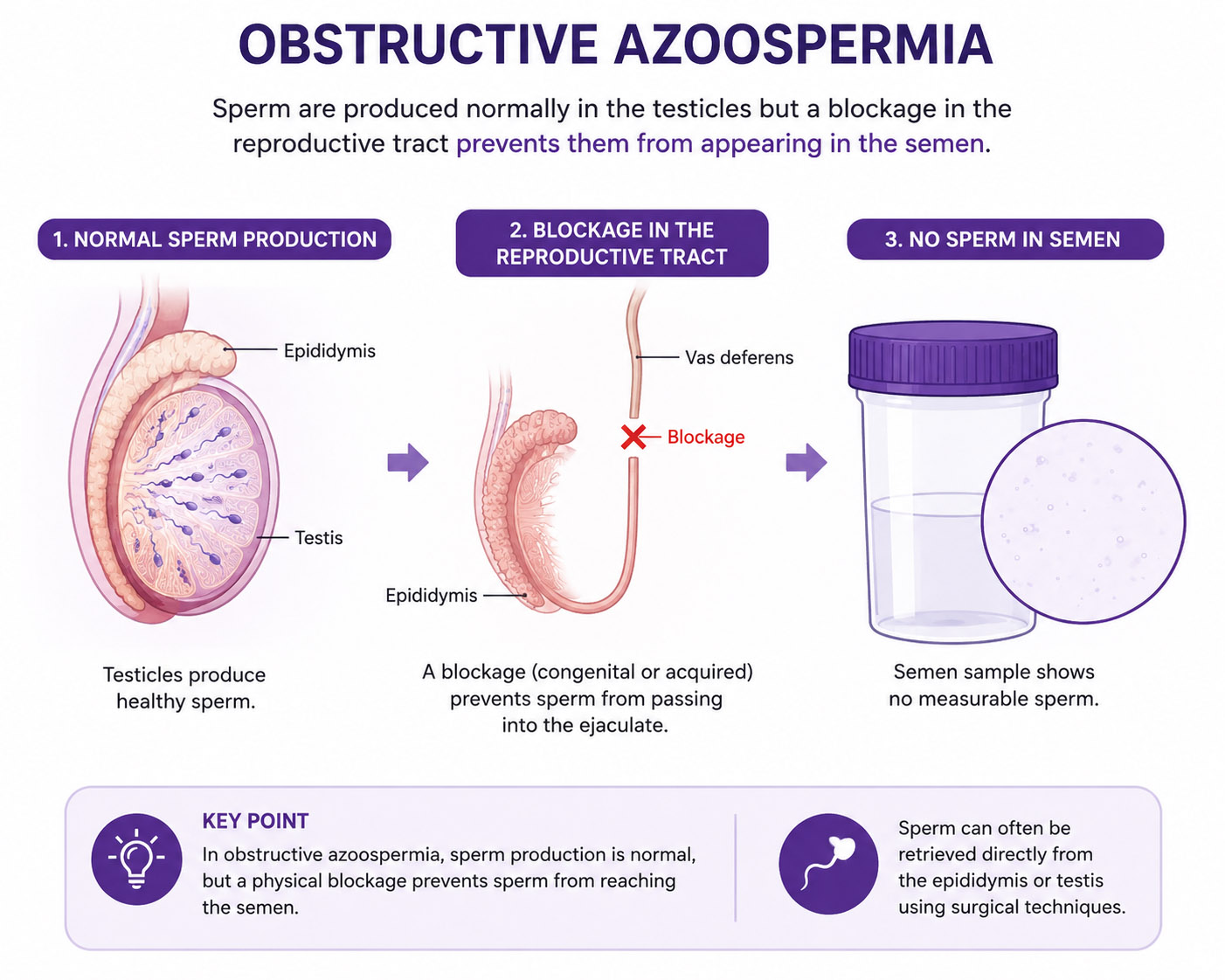
- Obstructive azoospermia — Sperm is produced normally but cannot reach the semen because of a blockage in the reproductive tract.
- Selected cases of non-obstructive azoospermia — Sperm production is reduced, but sperm may still be found within the testicular tissue.
- Previous vasectomy — Sperm retrieval may be an alternative to vasectomy reversal for couples pursuing fertility treatment.
- Ejaculatory disorders — Conditions that prevent sperm from being ejaculated naturally.
- Assisted reproductive treatment — When sperm is required for IVF or ICSI.
Watch Dr Joe Lee explain what it means when there is no sperm in the semen (azoospermia), the possible causes, and why further evaluation is important in identifying the underlying problem.
@drjollyurology 🚨 No Sperm, No Hope? From zero sperm to ART & donor sperm options—discover how to still make parenthood possible! #urology #doctor #menshealth #fyp #fertility #fertilityjourney
♬ original sound - Dr Joe Lee | Urology - Dr Joe Lee | Urology
Types of Surgical Sperm Retrieval
Several surgical sperm retrieval techniques are available, and the most appropriate procedure depends on the cause of infertility, the location of viable sperm and the planned fertility treatment.
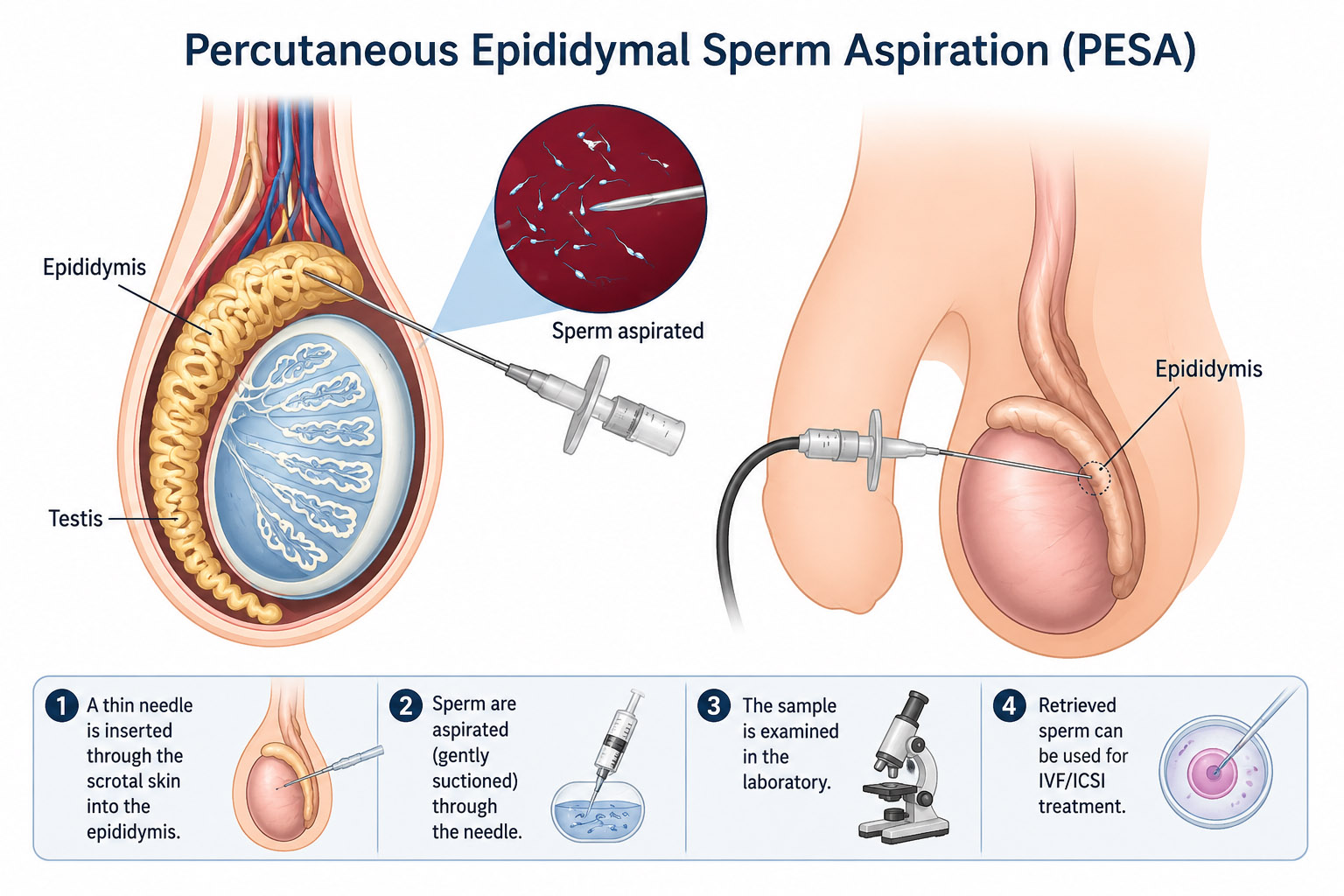
- PESA (Percutaneous Epididymal Sperm Aspiration) — A fine needle is used to retrieve sperm from the epididymis. This technique is commonly used in men with obstructive azoospermia.
- TESA (Testicular Sperm Aspiration) — A needle is inserted into the testicle to obtain tissue or fluid containing sperm for laboratory examination.
- TESE (Testicular Sperm Extraction) — A small sample of testicular tissue is surgically removed and examined to identify and retrieve sperm.
- Micro-TESE (Microsurgical Testicular Sperm Extraction) — An operating microscope is used to identify seminiferous tubules that are more likely to contain sperm, particularly in selected men with non-obstructive azoospermia.
Your urologist will recommend the most suitable technique after evaluating the cause of your infertility, your medical history and your fertility treatment plan.
What to Expect During Surgical Sperm Retrieval?
Surgical sperm retrieval is usually performed as a day procedure. Before treatment, your urologist will carry out a detailed fertility assessment to determine the most appropriate retrieval technique and discuss how the retrieved sperm will be used.
Before the procedure
- Fertility assessment — Your medical history and fertility concerns will be reviewed.
- Semen analysis — One or more semen samples may be analysed to confirm the diagnosis.
- Hormone testing — Blood tests may be performed to assess hormone levels related to sperm production.
- Additional investigations — Ultrasound scans or genetic testing may be recommended in selected cases.
- Treatment planning — Your urologist and fertility specialist will discuss the most appropriate sperm retrieval technique and reproductive options.
- Anaesthesia assessment — Local or general anaesthesia will be planned depending on the procedure.
During the procedure
- Anaesthesia — The procedure is performed under local or general anaesthesia, depending on the chosen technique.
- Sperm retrieval — Sperm is collected directly from the epididymis or testicle using the selected surgical method. An operative microscope is used when greater precision is required.
- Laboratory examination — The retrieved sample is immediately examined by an embryologist to identify viable sperm.
- Sperm cryopreservation — Retrieved sperm may be frozen for future use if appropriate.
After the procedure
- Recovery — Most patients return home on the same day following a short recovery period.
- Mild discomfort or swelling — Temporary soreness, bruising or swelling may occur around the treatment area.
- Wound care — Your urologist will provide instructions on caring for the surgical site during recovery.
- Follow-up appointments — Follow-up visits allow your recovery and treatment plan to be reviewed.
- IVF or ICSI planning — If sperm is successfully retrieved, the next steps for assisted reproduction will be discussed with your fertility team.
Benefits of Surgical Sperm Retrieval
Surgical sperm retrieval provides an opportunity for many men with certain forms of male infertility to father a biological child when sperm cannot be obtained through ejaculation. The procedure is tailored to the underlying cause of infertility and is often performed alongside assisted reproductive treatment.
Potential benefits include:
- Supports biological fatherhood — Enables suitable men with male infertility to use their own sperm for fertility treatment.
- Retrieves sperm when absent from the semen — Allows sperm to be collected directly from the epididymis or testicles when it is not present in the ejaculate.
- Range of minimally invasive techniques — Several retrieval methods are available to suit different causes of infertility.
- Usually performed as day surgery — Most patients return home on the same day as the procedure.
- Can be combined with sperm freezing — Retrieved sperm may be cryopreserved for future fertility treatment where appropriate.
- Facilitates IVF and ICSI — Retrieved sperm can be used in assisted reproductive techniques to improve the chance of achieving pregnancy.
Your urologist will recommend the most appropriate surgical sperm retrieval technique based on the cause of infertility and your individual fertility goals.
Risks and Limitations of Surgical Sperm Retrieval
Surgical sperm retrieval is generally a safe procedure when performed by an experienced urologist. However, as with any surgical intervention, there are potential risks and limitations that should be considered before treatment.
- Pain or discomfort — Mild soreness or discomfort around the treatment site is common during the recovery period.
- Swelling — Temporary swelling of the scrotum may occur and usually settles within a few days.
- Bruising — Mild bruising around the surgical area is common and typically resolves on its own.
- Bleeding — Minor bleeding or the formation of a small haematoma may occasionally occur.
- Infection — Although uncommon, there is a small risk of infection following the procedure.
- No sperm may be found — In some men, particularly those with certain forms of non-obstructive azoospermia, surgical sperm retrieval may not successfully identify viable sperm.
- Additional fertility treatment may be required — Surgical sperm retrieval is only one step in the fertility journey, and assisted reproductive treatments such as IVF or ICSI are usually needed to achieve pregnancy.
Your urologist will discuss the potential risks, expected outcomes and the likelihood of successful sperm retrieval based on your individual diagnosis.
What Results Can Patients Expect from Surgical Sperm Retrieval?
Surgical sperm retrieval can successfully obtain sperm in many men with appropriate indications for the procedure. However, the likelihood of successful sperm retrieval varies depending on the underlying cause of infertility and the technique used.
Patients can generally expect:
- Successful sperm retrieval in many suitable patients — Many men with obstructive azoospermia and selected men with non-obstructive azoospermia achieve successful sperm retrieval.
- Results depend on the underlying cause — The success of surgical sperm retrieval varies according to the type and severity of male infertility.
- Retrieved sperm may be cryopreserved — Successfully retrieved sperm can often be frozen for future fertility treatment if appropriate.
- Supports IVF and ICSI treatment — Retrieved sperm is commonly used in assisted reproductive techniques such as IVF and ICSI.
- Pregnancy depends on multiple factors — Successful sperm retrieval does not guarantee pregnancy, as outcomes also depend on female fertility, embryo quality and other reproductive factors.
- Regular follow-up is important — Ongoing review with your urologist and fertility specialist helps guide the next steps in your fertility treatment.
While surgical sperm retrieval can provide an opportunity to obtain sperm for assisted reproduction, your fertility team will discuss realistic expectations based on your individual circumstances.
Summary
Surgical sperm retrieval is a group of procedures used to obtain sperm directly from the epididymis or testicles in men with certain forms of male infertility. Depending on the underlying cause, several surgical techniques are available to maximise the chances of successful sperm retrieval.
If viable sperm is successfully retrieved, it can often be used in assisted reproductive treatments such as IVF or ICSI. A consultation with a urologist can help determine whether surgical sperm retrieval is the most appropriate option for your fertility journey.
If you have been diagnosed with azoospermia or are experiencing male infertility, schedule a consultation (link to ‘Contact Us’ page) with Dr Joe Lee to determine whether surgical sperm retrieval may be an appropriate option for your fertility journey.